Sage green has become a favourite in interior design because it brings a soft, natural character to a room without feeling overly bright or dramatic. Its muted green appearance, often influenced by grey or warm earthy undertones, makes it surprisingly versatile.
But what colors go with sage green?
The best colors to pair with sage green include warm white, cream, beige, taupe, natural wood, terracotta, blush pink, dusty blue, navy, charcoal, mustard, chocolate brown, soft grey, muted lavender and deeper greens.
The right combination depends on the mood you want to create. Warm neutrals make sage green feel relaxed and welcoming, while darker colors add contrast and sophistication. Earthy accents create a nature-inspired palette, and soft pastels produce a gentle, elegant atmosphere.
Whether you’re decorating a sage green bedroom, choosing furniture for a living room or planning new kitchen cabinets, these 15 color combinations will help you create a balanced and beautiful interior.
Why Does Sage Green Work With So Many Colors?
Sage green is a muted green rather than a highly saturated one. This makes it easier to combine with both neutrals and stronger accent colors.
Some sage greens lean grey and cool, while others have warmer, yellowish or olive undertones.
That distinction matters.
A cool, grey-based sage may look particularly harmonious with soft grey and dusty blue. A warmer sage often works beautifully with cream, terracotta and honey-coloured timber.
Before choosing your palette, examine a paint sample in natural and artificial light.
The same sage green can look noticeably different depending on the room’s orientation, surrounding materials and lighting.
1. Sage Green and Warm White: Fresh and Timeless
Sage green and warm white create one of the easiest color combinations for modern interiors.
Warm white brightens the room without the sometimes stark contrast of pure brilliant white.
Use sage green on the walls and warm white on ceilings, trim or larger furniture pieces.
This combination is especially effective in bedrooms, living rooms and kitchens.
Best for: Scandinavian, minimalist, modern farmhouse and relaxed contemporary interiors.
Styling tip: Add light oak furniture and woven textures to keep the room from feeling too plain.
2. Sage Green and Cream: Soft and Elegant
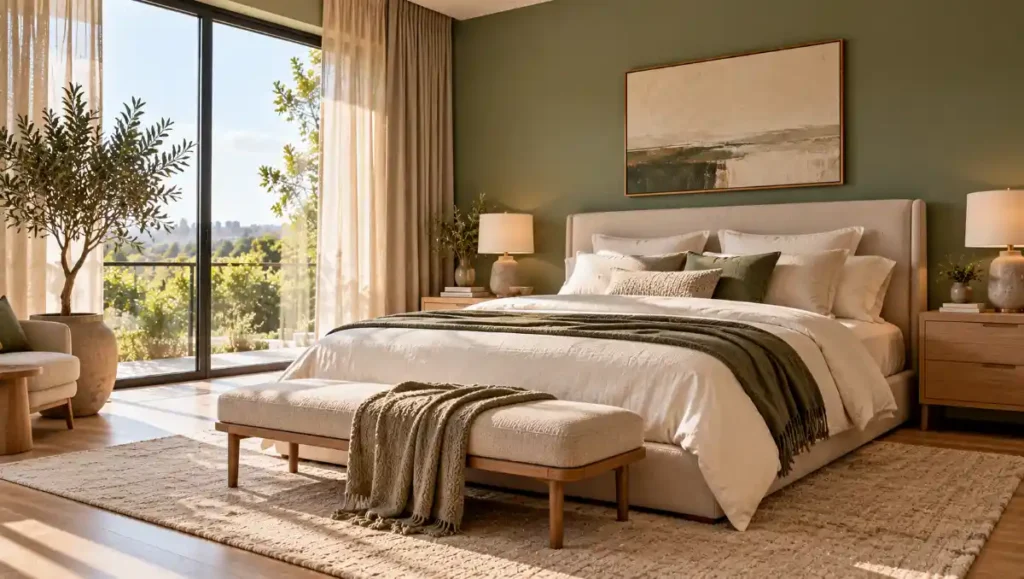
Cream softens sage green and creates a welcoming bedroom palette.
Cream brings warmth to sage green and creates a comfortable, inviting atmosphere.
Unlike bright white, cream has a subtle yellow or beige undertone that works well with warmer sage shades.
Try cream upholstery against sage green walls, or use sage green bedding in a bedroom with creamy walls.
Linen curtains, boucle chairs and soft wool rugs can strengthen the layered look.
Best for: Bedrooms, traditional-modern living rooms and cosy reading corners.
Styling tip: Mix several cream textures rather than relying on one flat shade.
3. Sage Green and Beige: Calm and Natural
Beige is a reliable partner for sage green because both colors create a relatively understated background.
The combination works particularly well with natural materials such as timber, stone and linen.
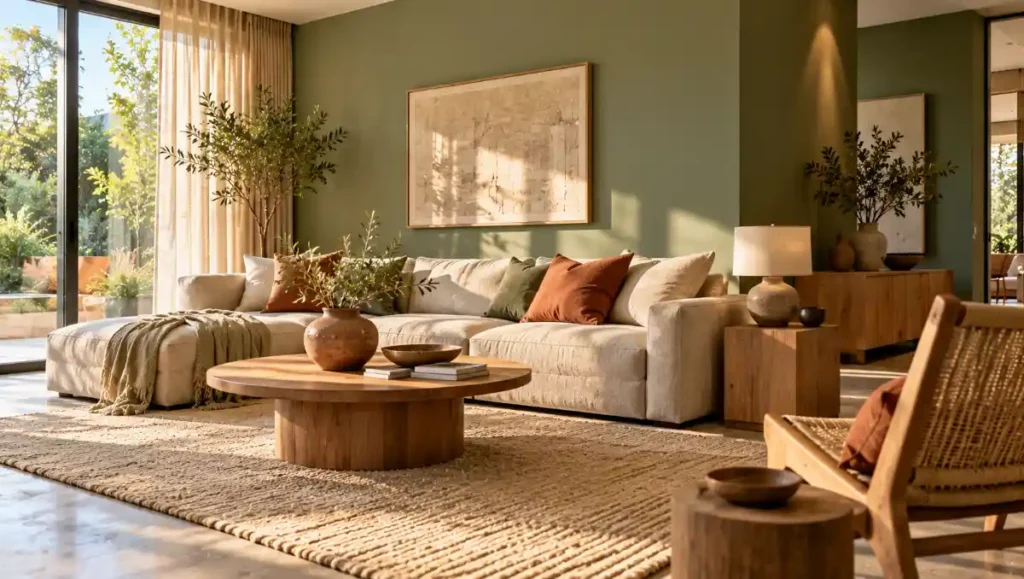
For a modern living room, consider sage green walls, a beige sofa, an oatmeal rug and oak furniture.
This approach creates visual interest without requiring bright accents.
Best for: Living rooms, bedrooms and open-plan apartments.
Styling tip: Choose beige tones with compatible undertones. A very pink beige may look less cohesive beside a strongly yellow-green sage.
4. Sage Green and Taupe: Understated Sophistication
Taupe sits between brown and grey, making it an excellent choice for more sophisticated sage green interiors.
It adds depth while maintaining a quiet, neutral palette.
Try taupe upholstered chairs, stone-effect flooring or curtains against sage green walls.
The combination is particularly appealing when paired with bronze, dark wood or brushed metal finishes.
Best for: Contemporary living rooms, home offices and elegant bedrooms.
Styling tip: Include one lighter shade, such as ivory, to prevent the palette from becoming too subdued.
5. Sage Green and Natural Wood: Warm and Organic
Natural timber adds warmth to sage green kitchen cabinetry.
Natural timber is one of the most effective companions for sage green.
Light oak creates a fresh, airy look, while walnut adds richness and contrast.
The pairing works because green and timber visually reference the natural environment.
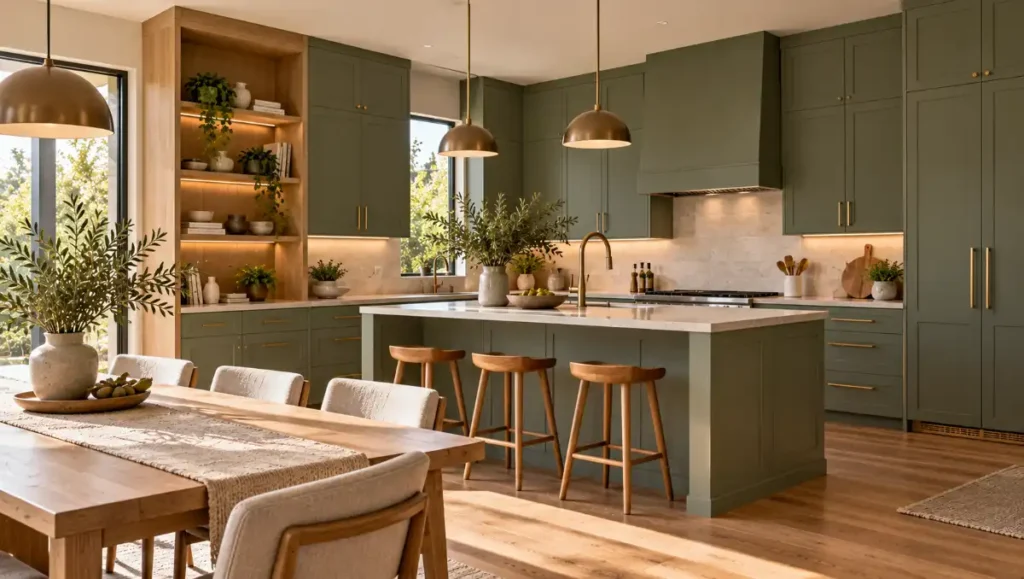
For example, sage green kitchen cabinets can look beautiful with oak shelving and a pale stone worktop.
In a bedroom, timber bedside tables and a wooden headboard can complement sage green walls.
Best for: Kitchens, dining rooms, bedrooms and nature-inspired interiors.
Styling tip: Repeat the same wood tone in two or three places to create continuity.
6. Sage Green and Terracotta: Earthy and Inviting
Terracotta introduces earthy contrast and warmth to sage green interiors.
Terracotta introduces warmth and character to sage green.
The muted reddish-orange tones of terracotta create a gentle contrast with green, making the combination feel lively without being overwhelming.
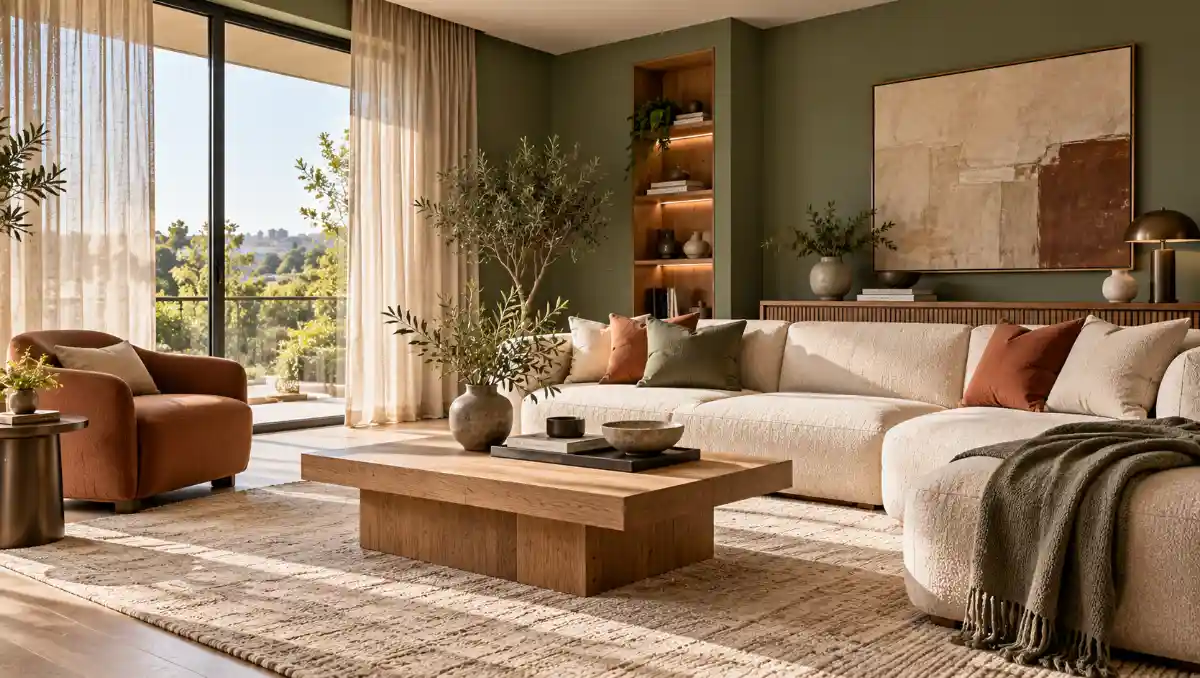
Try terracotta cushions on a cream sofa in a sage green living room.
You can also introduce terracotta through ceramic vases, handmade tiles, artwork and plant pots.
Best for: Mediterranean-inspired interiors, living rooms, kitchens and dining areas.
Styling tip: Use terracotta as an accent rather than covering every surface with it.
7. Sage Green and Blush Pink: Soft and Romantic
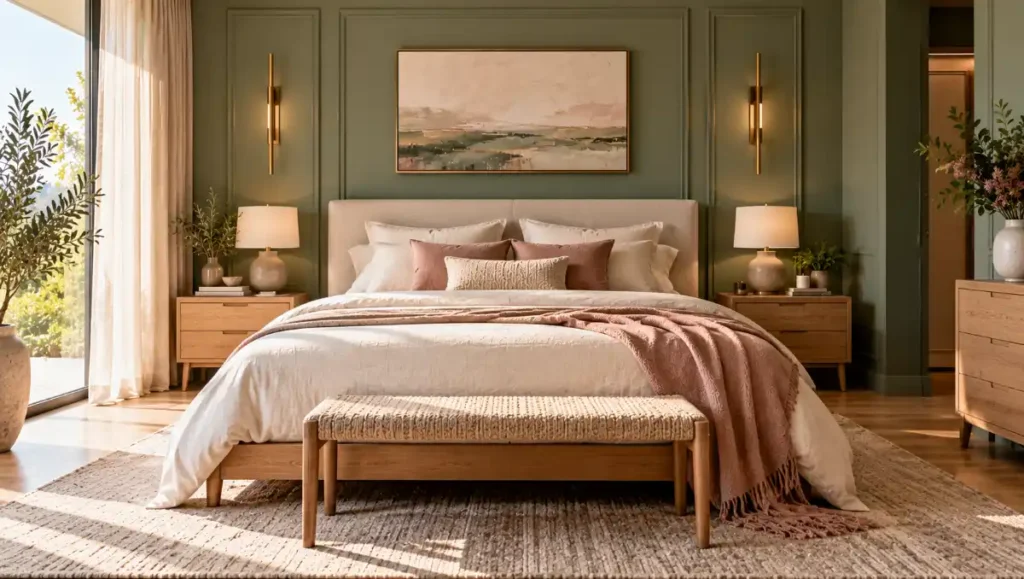
Blush pink adds a soft, romantic accent to sage green bedrooms.
Blush pink and sage green form a delicate combination that works particularly well in bedrooms.
The gentle contrast between muted green and soft pink creates a calm, romantic atmosphere.
For a sophisticated result, choose dusty or muted pink rather than an intense candy-pink shade.
Consider sage green walls, blush cushions, ivory bedding and natural wood furniture.
Best for: Bedrooms, guest rooms and soft contemporary interiors.
Styling tip: Add warm white or cream to keep the room balanced.
8. Sage Green and Dusty Blue: Relaxed and Coastal
Dusty blue creates a cool, peaceful pairing with sage green.
Because both shades are relatively muted, they can work together without competing for attention.
This palette is especially suitable for bedrooms and coastal-inspired living rooms.
Try dusty blue cushions, a blue-grey rug or artwork with subtle blue accents against sage green walls.
Best for: Bedrooms, coastal interiors and relaxed living spaces.
Styling tip: Introduce warm timber or cream to prevent the room from feeling overly cool.
9. Sage Green and Navy Blue: Bold and Refined
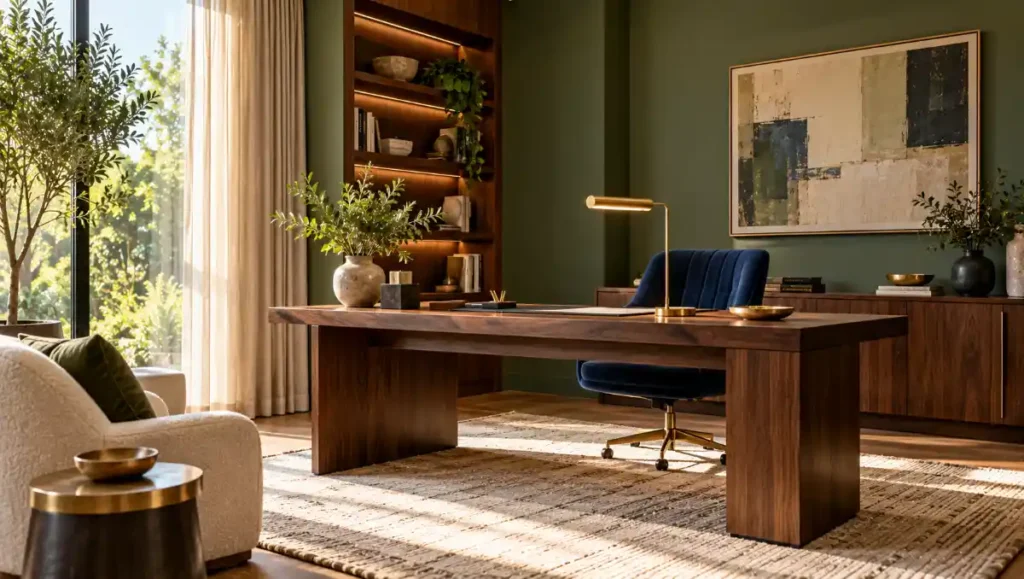
Navy blue adds sophisticated contrast to sage green.
Navy blue provides a stronger contrast than most neutral pairings.
The depth of navy can make sage green appear softer and lighter.
This combination works particularly well in home offices, living rooms and sophisticated bedrooms.
For example, use sage green walls with a navy upholstered chair, dark blue cushions and warm brass details.
Best for: Modern classic interiors, home offices and formal living rooms.
Styling tip: Keep larger surfaces relatively light if the room has limited daylight.
10. Sage Green and Charcoal: Modern and Dramatic
Charcoal grey adds architectural contrast to sage green.
The combination works especially well in modern kitchens, contemporary living rooms and minimalist spaces.
Sage green cabinetry with charcoal hardware, dark stone surfaces or black-framed glazing can create a clean and confident appearance.
However, dark accents can dominate smaller rooms if used excessively.
For compact spaces, our small living room ideas guide explains how to balance furniture scale, light and color.
Best for: Contemporary kitchens, living rooms and minimalist interiors.
Styling tip: Use charcoal in selected elements rather than making every major surface dark.
11. Sage Green and Mustard Yellow: Warm and Playful
Mustard yellow introduces personality to sage green interiors.
Its earthy golden tone works particularly well with warm sage shades.
The combination is more expressive than beige or cream but can still feel sophisticated when carefully balanced.
Try a mustard accent chair, patterned cushions or a small artwork in a sage green room.
Best for: Eclectic living rooms, creative home offices and mid-century-inspired spaces.
Styling tip: Keep mustard to a few accents and let sage green remain the main color.
12. Sage Green and Chocolate Brown: Rich and Grounded
Chocolate brown creates a warm, substantial contrast with sage green.
Dark brown leather, walnut furniture and chocolate-coloured textiles can make sage green feel more luxurious.
This palette works especially well in rooms with good daylight.
A sage green living room with a dark brown leather sofa, cream curtains and warm timber flooring can feel both contemporary and timeless.
Best for: Living rooms, libraries and sophisticated bedrooms.
Styling tip: Add a light neutral to prevent the room from feeling visually heavy.
13. Sage Green and Soft Grey: Quiet and Contemporary
Soft grey is a natural choice for a sage green with cooler undertones.
The combination creates a restrained contemporary look.
Try light grey upholstery with sage green walls, or use sage green accessories in a room with pale grey walls.
Be careful with very cool blue-grey shades if your sage green has a strong yellow undertone.
Best for: Minimalist bedrooms, apartments and contemporary living rooms.
Styling tip: Add wood, textured fabric or warm lighting so the room doesn’t feel flat.
14. Sage Green and Muted Lavender: Subtle and Unexpected
Lavender might not be the first color that comes to mind when decorating with sage green, but muted versions can create a distinctive palette.
The combination feels gentle and slightly playful.
Use lavender through small accessories, artwork, cushions or flowers rather than introducing it across every large surface.
A sage green bedroom with muted lavender bedding and warm white walls can feel fresh without being overly colorful.
Best for: Bedrooms, guest rooms and creative interiors.
Styling tip: Choose greyed lavender rather than highly saturated purple.
15. Sage Green and Forest Green: Layered and Nature-Inspired
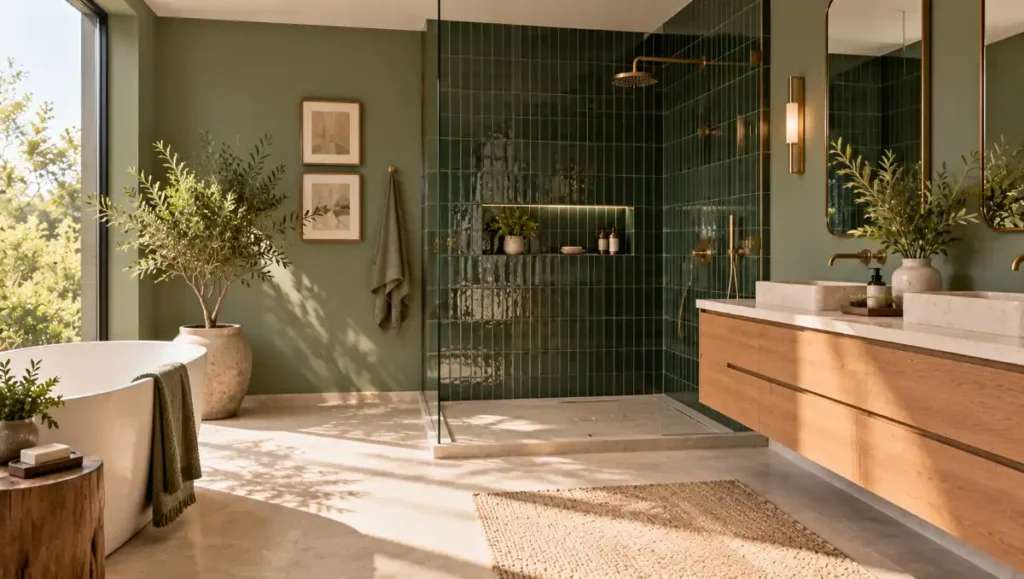
Layering light and dark greens creates a nature-inspired bathroom palette.
Combining sage green with darker green creates a tonal palette that feels connected to nature.
Forest green provides depth, while sage green keeps the room feeling soft and approachable.
Use sage green on the walls and darker green through upholstery, tiles, artwork or accessories.
Natural stone, timber and linen can reinforce the organic character.
This approach also connects with the broader principles explored in our biophilic design guide.
Best for: Living rooms, bedrooms, bathrooms and botanical interiors.
Styling tip: Vary the textures and lightness of the greens so the room doesn’t look flat.
Sage Green Color Combinations at a Glance
Color pairing
Overall mood
Best rooms
Warm white
Fresh and timeless
Kitchen, living room
Cream
Soft and welcoming
Bedroom, lounge
Beige
Calm and natural
Living room, bedroom
Taupe
Elegant and understated
Office, bedroom
Natural wood
Warm and organic
Kitchen, dining room
Terracotta
Earthy and expressive
Living room, dining room
Blush pink
Gentle and romantic
Bedroom, guest room
Dusty blue
Peaceful and coastal
Bedroom, lounge
Navy blue
Refined and dramatic
Office, living room
Charcoal
Modern and contrasting
Kitchen, living room
Mustard yellow
Warm and playful
Living room, office
Chocolate brown
Rich and grounded
Living room, library
Soft grey
Minimal and balanced
Bedroom, apartment
Muted lavender
Delicate and creative
Bedroom, guest room
Forest green
Layered and botanical
Living room, bathroom
What Colors Go With Sage Green Walls?
When sage green is the main wall color, furniture and accessories should complement its undertone.
For a warm, welcoming room, choose cream upholstery, oak furniture and terracotta accessories.
For a contemporary look, combine sage green walls with charcoal details, pale flooring and warm white trim.
For a softer bedroom, use ivory bedding, blush pink cushions and natural linen curtains.
The key is to balance the green rather than matching every item to it.
What Color Furniture Goes With Sage Green?
Several furniture finishes work particularly well with sage green.
Beige or cream sofas: Create a light and relaxed living room.
Natural oak furniture: Adds warmth and complements the organic character of green.
Walnut furniture: Creates a richer, more sophisticated look.
Charcoal or black accents: Introduce definition in modern interiors.
Brown leather seating: Adds warmth and texture.
Blush or dusty blue upholstery: Provides gentle color contrast.
If your room already contains expensive furniture, use its color as the starting point and select the sage green paint accordingly.
Best Sage Green Color Combinations for Each Room
Sage Green Living Room
A balanced living room palette might include sage green walls, a warm beige sofa, an oak coffee table and terracotta cushions.
If you prefer a more dramatic look, introduce navy or charcoal through selected furniture pieces.
Artwork can also help connect different colors. Our art wall design guide offers practical ideas for creating a coordinated focal point.
Sage Green Bedroom
For a peaceful bedroom, combine sage green with cream, warm white, blush pink or dusty blue.
Soft bedding, linen curtains and natural timber furniture help create a relaxed atmosphere.
A darker green or navy accent can work well behind the bed if the room has sufficient light.
Sage Green Kitchen
Sage green kitchen cabinets pair beautifully with warm white worktops, oak shelving, cream tiles and brushed brass finishes.
For a modern contrast, consider dark hardware or charcoal accents.
Test cabinet colors alongside the actual flooring, backsplash and worktop materials before committing.
Sage Green Bathroom
Sage green can work well with off-white tiles, pale stone, timber-look finishes and brushed metal fixtures.
Darker green accents can create depth, while warm white helps smaller bathrooms feel brighter.
Choose moisture-resistant finishes and materials suitable for wet areas.
Sage Green Home Office
Pair sage green with walnut, taupe, navy or charcoal for a focused, sophisticated workspace.
A warm timber desk and cream accessories can prevent the palette from becoming too dark.
How to Choose the Right Sage Green Undertone
Not every sage green paint looks the same.
Some shades are warm and olive-toned. Others have a cooler, grey-green appearance.
To choose the right combination:
Identify the undertone. Compare your sage green sample with warm and cool neutral samples.
Check the daylight. Examine the paint in morning, afternoon and evening light.
Compare fixed finishes. Look at flooring, countertops, tiles and large furniture pieces.
Test more than one pairing. Place sample boards together rather than judging colors individually.
Review artificial lighting. Warm and cool light sources can noticeably change how a color appears.
Paint manufacturers’ digital color samples are useful for shortlisting, but they are not substitutes for physical samples.
How to Decorate With Sage Green Without Overdoing It
Sage green can be used as a dominant color or a subtle accent.
A simple starting point is the 60-30-10 decorating guideline:
60% dominant color, such as warm white
30% secondary color, such as sage green
10% accent color, such as terracotta
This is a flexible visual guideline, not a strict design rule.
You can also reverse the arrangement by using sage green on the walls and introducing cream and timber through furniture.
For a low-cost refresh, painting one room or changing cushions, curtains and artwork may be enough. Our home renovation ideas that add value guide explores other practical interior improvements.
Common Mistakes When Pairing Colors With Sage Green
Ignoring Undertones
A warm sage green may not look harmonious with every cool grey or pink-based beige.
Using Too Many Accent Colors
A room with sage green, mustard, navy, pink, terracotta and several metallic finishes can quickly become visually busy.
Choosing Everything in the Same Shade
An entirely sage green room may lack depth. Introduce lighter and darker tones along with different textures.
Forgetting the Flooring
Existing wood, tile or stone flooring can strongly influence how sage green looks.
Relying Only on Online Paint Images
Screens display colors differently, and lighting conditions can significantly affect the final result.
Final Thoughts
Sage green is a versatile decorating color that works with everything from warm white and beige to terracotta, navy and chocolate brown.
For a calm and timeless interior, pair it with cream, natural wood or warm neutrals.
For a more expressive room, introduce terracotta, mustard yellow or blush pink.
If you prefer contemporary contrast, navy and charcoal can create a sophisticated result.
Ultimately, the best color combination depends on your sage green’s undertone, the room’s natural light and the furniture and materials you already own.
Start with one main color, one supporting neutral and one carefully chosen accent. This approach makes it easier to create a beautiful, balanced interior that feels personal rather than overly coordinated.
Frequently Asked Questions
What color goes best with sage green?
Warm white, cream, beige and natural wood are among the most versatile choices. Terracotta, navy and blush pink also work beautifully as accents.
What is the complementary color of sage green?
On a traditional color wheel, muted reddish or pinkish tones sit broadly opposite green. Because sage green is a muted, variable shade, dusty pink and terracotta often provide attractive complementary-style contrasts.
Does grey go with sage green?
Yes. Soft grey can work particularly well with cooler, grey-based sage greens. Check the undertones before combining them.
Does navy blue go with sage green?
Yes. Navy blue adds contrast and creates a refined palette, especially in living rooms, bedrooms and home offices.
What color curtains go with sage green walls?
Cream, warm white, oatmeal, beige and soft grey are versatile options. Dusty blue or muted pink curtains can provide gentle contrast.
What color sofa goes with sage green walls?
Cream, beige, taupe, light grey, chocolate brown and navy sofas can all work, depending on the room’s style and lighting.
What accent colors go with sage green?
Terracotta, mustard yellow, blush pink, navy, charcoal, brass and deeper green are attractive accent choices.
Is sage green a warm or cool color?
Sage green can be warm or cool depending on its undertones. Some versions lean olive or yellow-green, while others appear more grey-green.
Is sage green suitable for small rooms?
Yes. A lighter sage green can create a soft, calm backdrop. Pairing it with warm white, light furniture and appropriate lighting can help a small room feel balanced and comfortable.