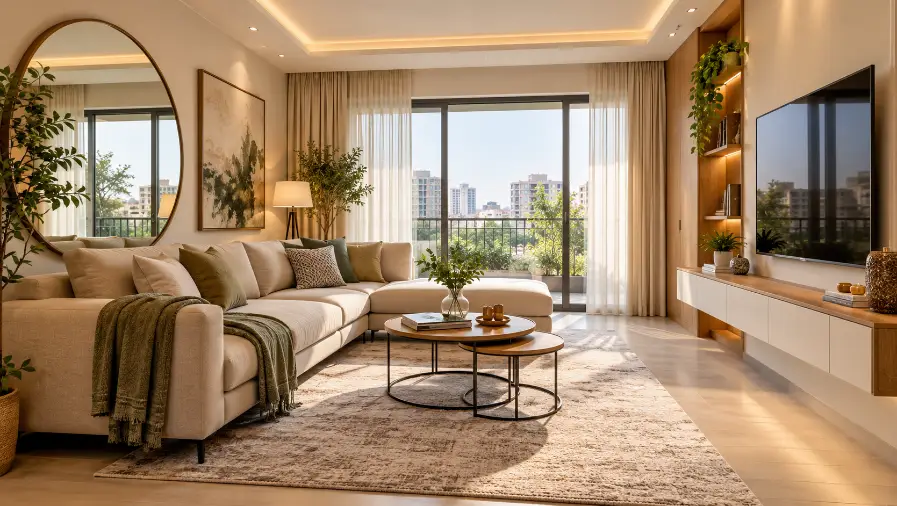
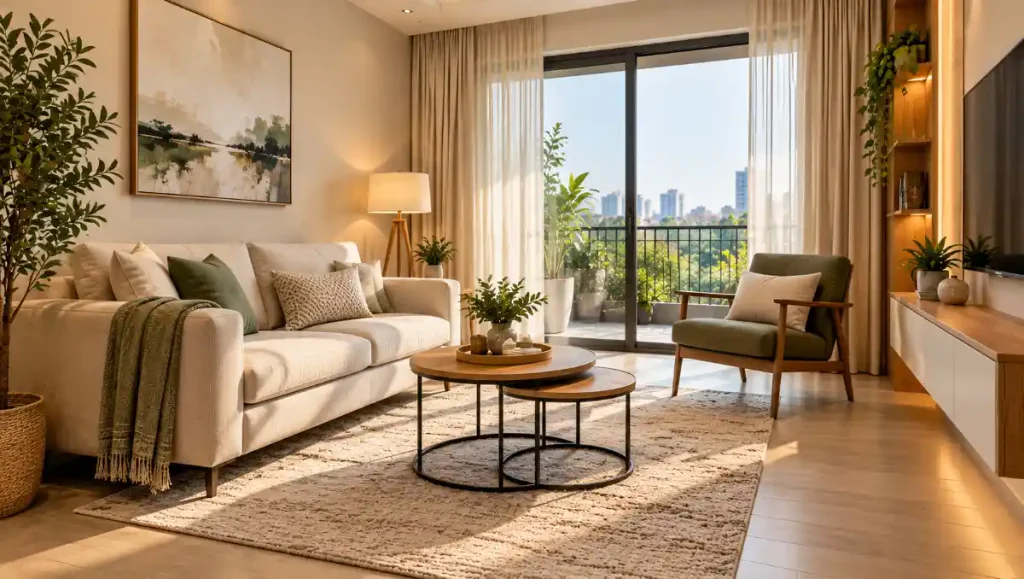
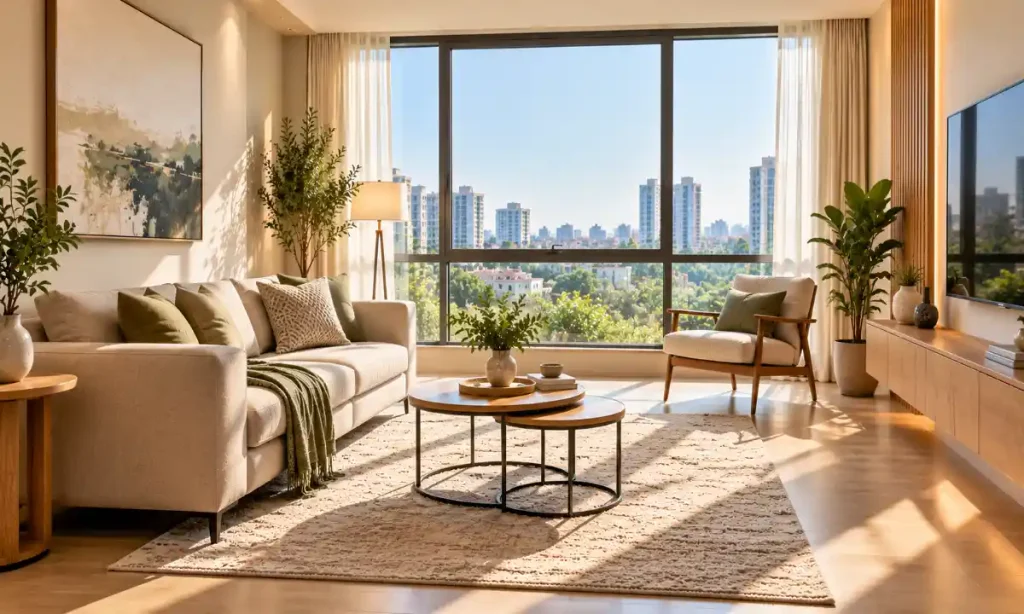
A small living room does not have to feel cramped. With the right furniture proportions, colors, lighting, storage and layout, even a compact room can feel surprisingly open and comfortable.
The key is not simply putting fewer things in the room. Good small living room design is about making every element work harder while maintaining clear sightlines and enough empty space for the room to breathe.
Whether you are decorating a studio apartment, a compact city home or a narrow lounge, these 15 small living room ideas can help you create a space that looks bigger without sacrificing personality or comfort.
1. Start With the Right Furniture Scale
One of the most common mistakes in a small living room is choosing furniture designed for a much larger space.
An oversized sectional can dominate the room before you add anything else. Instead, look for furniture with proportions that suit the available floor area.
Consider:
A compact two- or three-seat sofa
Slim armchairs
Narrow side tables
Nesting tables
Smaller coffee tables
Furniture with slender legs
This does not mean every piece needs to be tiny. A room filled with many small pieces can actually look busier than one containing a few well-proportioned pieces.
Measure the room—and the circulation paths—before buying furniture.
2. Keep the Floor Visually Open
The more floor you can see, the more spacious a room can appear.
Furniture raised on legs is particularly useful because your eye can continue underneath it rather than stopping at a solid base.
A sofa with visible legs, a slim-legged console and an elevated media unit can therefore feel lighter than bulky furniture extending all the way to the floor.
This principle works especially well in modern and Scandinavian-inspired interiors.
Efficient use of space is also an important part of broader modern architecture and home design, particularly when designing compact urban homes.
3. Use Light Colors—but Don’t Make Everything White
Light colors can help a compact living room feel brighter and more open, particularly when natural light is limited.
Warm white, soft beige, pale greige, muted cream and light earthy tones can all create an airy backdrop.
However, a small living room does not need to be completely white.
Contrast can give the room depth.
For example, combine:
Warm white walls
Natural timber
A beige or light-grey sofa
Dark accent details
Muted green or terracotta accessories
The goal is visual harmony rather than eliminating color.
4. Let Natural Light Travel Through the Room
Natural light is one of the most valuable assets in a small living room.
Avoid unnecessarily blocking windows with tall furniture, heavy curtains or decorative objects.
Where privacy allows, consider lightweight curtains or blinds that can be fully opened during the day.
Place taller furniture away from the main window where possible.
If you are renovating rather than simply redecorating, window design can make an even greater difference. Slim frames and larger glazed areas are among the options explored in these modern aluminium window design ideas.
Always consider thermal comfort, privacy and glare alongside the desire for more glass.
5. Use Mirrors Strategically
A mirror can be particularly effective in a compact living room because it reflects both light and views.
But placement matters.
Rather than adding mirrors randomly, position one where it reflects something attractive—such as a window, artwork, greenery or an open part of the room.
A large mirror can often create a cleaner effect than several small mirrors.
Try:
A tall leaning mirror
A large mirror above a console
A simple round mirror
A wall-mounted rectangular mirror
Avoid creating a cluttered arrangement of highly decorative mirrors if your main goal is visual simplicity.
6. Choose Multi-Functional Furniture
In a small home, furniture that performs more than one job can reduce the number of individual pieces you need.
A storage ottoman, for example, can provide seating, hidden storage and sometimes a surface for a tray.
Other useful options include:
Nesting side tables
Storage benches
Sofa beds
Lift-top coffee tables
Ottomans with internal storage
Consoles that double as compact desks
Prioritize functions you will actually use rather than buying complicated transforming furniture simply because it is marketed for small spaces.
7. Take Storage Up the Wall
When floor area is limited, vertical space becomes valuable.
Instead of adding several freestanding cabinets, consider using shelving or built-in storage that extends upward.
Tall storage draws attention vertically while providing more capacity from a relatively small footprint.
The trick is to avoid filling every centimetre.
Mix closed storage with some open shelves so everyday clutter can disappear while a few carefully chosen objects remain visible.
8. Create One Strong Focal Point
Too many competing features can make a small room feel visually crowded.
Choose one primary focal point instead.
It might be:
A large piece of artwork
A fireplace
A beautiful window
A textured wall
A sculptural light
A carefully designed media wall
If artwork is your focal point, a single substantial piece can sometimes work better than dozens of small frames.
For more detailed inspiration, see our guide to creating an art wall, including layout, spacing and small-space considerations.
9. Use a Larger Rug Than You Think
A tiny rug floating in the middle of the room can visually fragment the floor.
A larger rug that relates properly to the seating arrangement often creates a more unified visual zone.
Ideally, the rug should connect the major pieces of furniture rather than appear isolated from them.
Exact sizing depends on the room and furniture arrangement, so measure before buying.
In an open-plan apartment, a rug can also define the living area without constructing a physical partition.
10. Keep the Layout Open
A compact living room needs clear movement paths.
Before deciding where the sofa goes, identify how people naturally move:
From the entrance to the seating
Toward adjacent rooms
To a balcony or terrace
Around the coffee table
Toward storage
Do not force people to weave around furniture.
Sometimes moving a sofa slightly away from a doorway or replacing one bulky armchair with a lighter chair can dramatically improve circulation.
In particularly narrow rooms, consider skipping the conventional sofa-plus-two-armchairs formula altogether.
Design for your actual room, not for a furniture showroom.
11. Use Wall-Mounted Furniture
Wall-mounted elements expose more of the floor and reduce visual weight.
Good candidates include:
Floating TV units
Floating shelves
Wall-mounted lighting
Slim wall desks
Floating cabinets
A wall-mounted media console, for example, can provide storage while maintaining a clean line underneath.
However, wall-mounted furniture needs suitable fixings and adequate wall support. Heavy units should be installed correctly for the wall construction.
12. Layer the Lighting
A single bright ceiling fixture can make a small room feel flat.
Instead, combine different types of lighting.
Start with general ambient lighting, then add task and accent lighting where needed.
A small living room might use:
A ceiling fixture for general light
A floor or wall lamp beside the sofa
A table lamp on a console
Subtle lighting around shelving or artwork
Wall-mounted lights are particularly useful where there is not enough floor space for multiple lamps.
You do not need to become a minimalist to make a small living room feel larger.
You do need visual hierarchy.
When every shelf, wall and surface is filled, the eye has nowhere to rest.
Instead of displaying everything you own, choose a smaller number of objects with different heights and textures.
Hide practical clutter such as chargers, remote controls, cables, paperwork and rarely used accessories inside closed storage.
A small room can still feel warm and personal—it simply benefits from more deliberate editing.
14. Use Curtains to Emphasize Height
Window treatments influence how we perceive the proportions of a wall.
Where the architecture and installation allow, positioning curtains higher than the top of the window can draw the eye upward.
Full-length curtains can also create a cleaner vertical line than short curtains that visually divide the wall.
Keep the fabric appropriate for the amount of privacy, daylight control and insulation you need.
In a room with a low ceiling, avoid unnecessarily heavy treatments that overwhelm the window.
15. Connect the Living Room With Adjacent Spaces
Sometimes the best way to make a small living room feel bigger is to look beyond the room itself.
If the living area connects to a kitchen, dining area, hallway, balcony or terrace, use visual continuity between them.
You might repeat:
Flooring
Wall colors
Timber tones
Metal finishes
Furniture styles
Accent colors
This helps adjacent areas feel connected rather than broken into multiple tiny visual zones.
If the living room opens onto a balcony or garden, maintaining a clear view toward the outdoors can make the room feel more expansive.
Small Living Room Layout: What Works Best?
There is no single layout that works for every compact living room.
Start with the largest essential piece—usually the sofa—and then arrange everything else around circulation and function.
For a narrow living room, placing the sofa along the longest wall may preserve a clear passage.
For a square room, a compact sofa paired with one or two lightweight chairs can create a conversational layout.
In an open-plan apartment, orienting the sofa can help define the living zone without adding walls.
Most importantly, avoid filling every empty corner simply because space is available.
Empty space is part of the design.
Common Small Living Room Mistakes
Even attractive furniture can make a small room unsuccessful when the overall composition is wrong.
Common mistakes include buying furniture before measuring, using too many small decorative objects, blocking natural light, choosing a rug that is too small, relying on one light source and placing furniture directly in circulation routes.
Another mistake is assuming that everything must be miniature.
One appropriately scaled statement sofa or artwork can give a small room more confidence than a collection of undersized pieces.
How to Make a Small Living Room Look Bigger on a Budget
You do not necessarily need a renovation.
Start with the changes that cost little or nothing.
Rearrange the furniture to improve circulation. Remove unnecessary objects. Move bulky pieces away from windows. Simplify visible shelves and reposition existing lamps.
If you have a modest decorating budget, prioritize paint, curtains, a properly sized rug, improved lighting and one strategically positioned mirror before replacing all the furniture.
These changes can alter the visual proportions of the room without changing its actual dimensions.
Final Thoughts
The most successful small living room ideas are not about disguising the size of the room. They are about making the available space work intelligently.
Choose appropriately scaled furniture, protect natural light, expose more floor, use vertical space, reduce unnecessary visual clutter and create clear circulation.
Then add personality through artwork, texture, plants, lighting and carefully chosen color.
A small living room can still feel sophisticated, comfortable and distinctive. When every element has a reason to be there, limited space can actually encourage better design.
Frequently Asked Questions
What colors make a small living room look bigger?
Light and relatively consistent colors can create an airy visual backdrop, but you do not have to use pure white. Warm neutrals, pale greys, soft earthy shades and other light tones can work well. Strategic darker accents can add depth without overwhelming the room.
Should a small living room have a large sofa?
It can, provided the sofa is correctly proportioned for the room and leaves comfortable circulation space. One well-scaled sofa can sometimes work better than several smaller seating pieces.
Do mirrors make a small living room look bigger?
Mirrors can increase the perception of depth and reflect light and views. For the strongest effect, position the mirror where it reflects an attractive or bright part of the room rather than a cluttered area.
What furniture is best for a small living room?
Look for appropriately scaled sofas and chairs, slim profiles, raised legs, nesting tables, storage ottomans and other multi-functional pieces. The best furniture depends on how you actually use the room.
How can I make a small living room look bigger without renovating?
Improve the furniture arrangement, expose more floor, declutter visible surfaces, use a larger rug, maximize daylight, add layered lighting, use a strategically positioned mirror and create a more consistent color palette.
How should I decorate a small living room with a TV?
Avoid letting the television and media storage dominate the room. A slim or wall-mounted media unit can reduce visual bulk. Keep surrounding decoration relatively simple and position seating according to comfortable viewing requirements.