
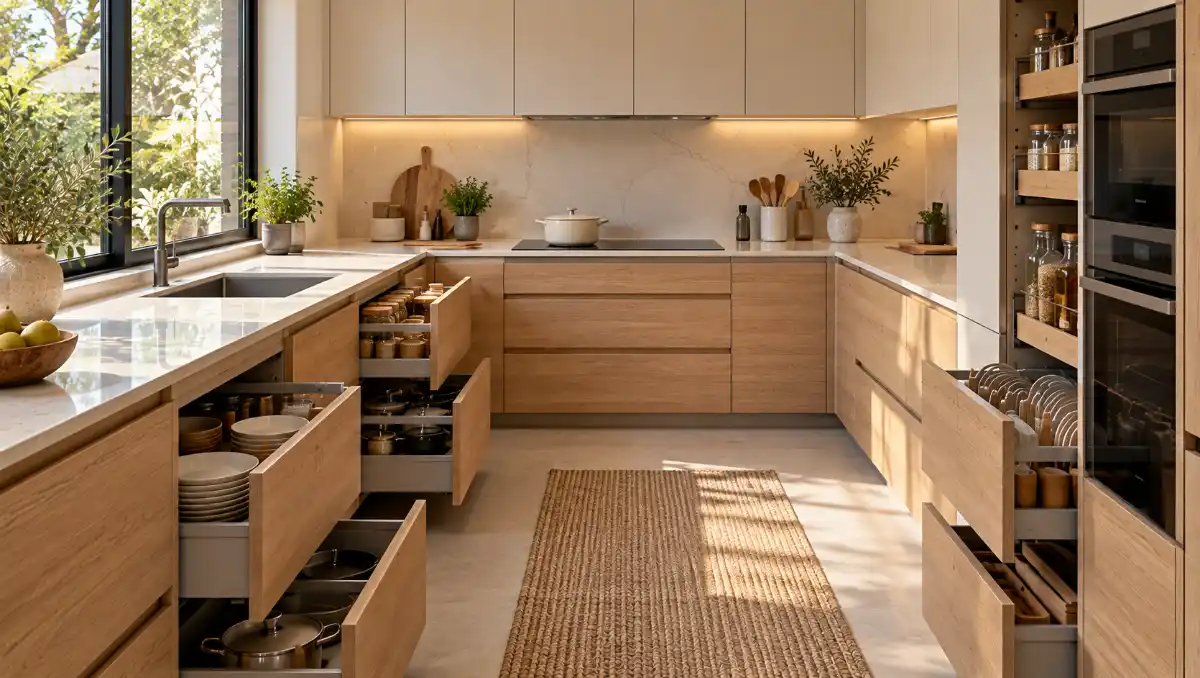
A small kitchen can feel cluttered surprisingly quickly. Between cookware, dishes, pantry staples, appliances and cleaning supplies, even a few poorly organized cabinets can make everyday cooking frustrating.
But a compact kitchen does not necessarily need more cabinets. Often, it needs smarter storage inside the cabinets you already have.
The best small kitchen storage ideas make use of overlooked vertical space, difficult corners, deep shelves and narrow gaps. They also make frequently used items easier to reach, so you spend less time searching and more time enjoying your kitchen.
Whether you have a small apartment kitchen, a galley layout or a compact family kitchen, these 17 practical ideas can help you maximize storage without sacrificing style.
Why Smart Storage Matters in a Small Kitchen
In a compact kitchen, storage is not simply about fitting more items into every available space.
Good organization should improve accessibility, reduce clutter and make cooking and cleaning easier.
Before buying organizers, take everything out of one cabinet and assess what you actually use. Remove duplicate utensils, expired food and items that belong elsewhere.
Then measure the cabinet’s internal width, depth and height, including hinges, pipes and door clearances.
These measurements will help you select organizers that genuinely fit.
1. Install Pull-Out Shelves in Deep Cabinets
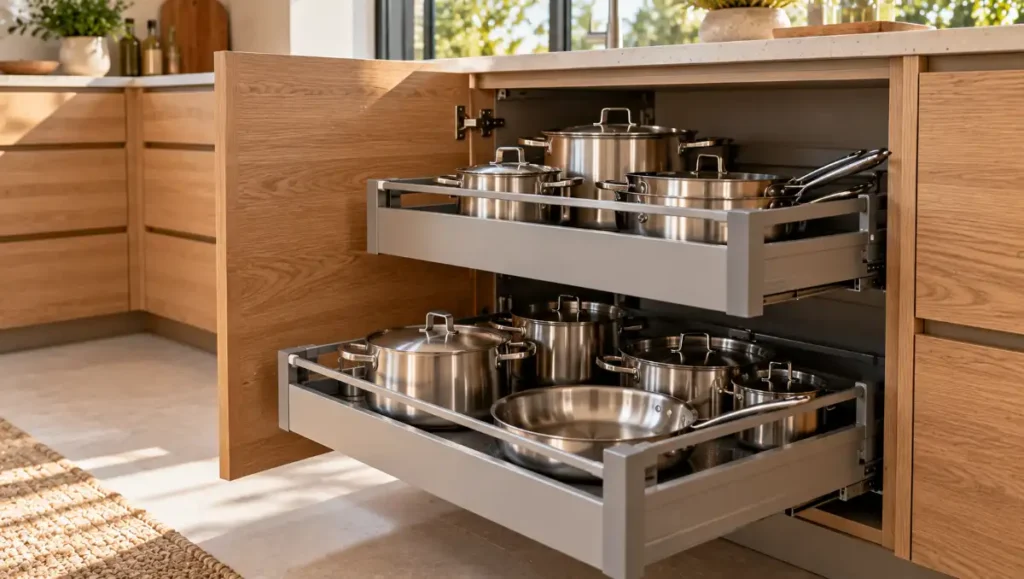
Deep base cabinets often waste space because items at the back are difficult to reach.
Pull-out shelves solve this problem by bringing stored items forward.
They work particularly well for pots, pans, food containers and small appliances.
How to use this idea: Install full-extension sliding shelves in suitable base cabinets. Keep heavier cookware on lower shelves and lighter items above.
Choose hardware rated for the weight you intend to store, and confirm that the pull-out clears cabinet doors and hinges.
Best for: Deep lower cabinets and compact galley kitchens.
2. Add Shelf Risers to Double Your Cabinet Space
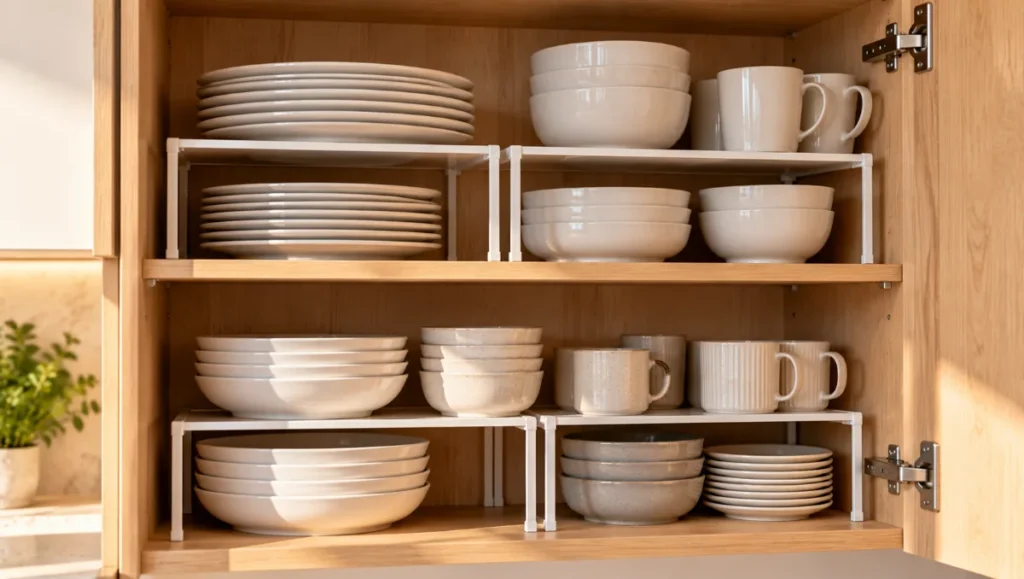
A single tall cabinet shelf can leave a surprising amount of unused space above plates and bowls.
Shelf risers create an additional storage level without permanent modifications.
Use one level for dinner plates and another for side plates, bowls or mugs.
Adjustable or stackable risers are especially useful in rental kitchens.
Best for: Upper cabinets storing everyday dishes.
Storage tip: Select sturdy, non-slip risers and avoid stacking fragile or heavy items too high.
3. Use Vertical Dividers for Baking Trays and Cutting Boards
Stacking baking trays, chopping boards and cooling racks horizontally makes them difficult to retrieve.
Vertical dividers let you store these items upright, almost like books on a shelf.
You can install a fixed divider system or use a freestanding organizer.
This approach also works for serving trays and pan lids.
Best for: Narrow base cabinets and tall cabinet compartments.
Storage tip: Place dividers near the cooking area for easier access.
4. Turn Cabinet Doors Into Extra Storage
The inside of a cabinet door is often overlooked.
Slim racks, hooks and shallow organizers can hold small items without taking up valuable shelf space.
Good candidates include measuring spoons, cleaning cloths, foil boxes and lightweight accessories.
Avoid deep door-mounted racks that collide with shelves or stored items when the door closes.
Best for: Pantry cabinets and cleaning-supply cupboards.
Storage tip: Check the door’s hinge capacity and allow sufficient clearance before installation.
5. Install a Pull-Out Spice Rack
Spice jars can occupy an entire shelf when stored in several rows.
A narrow pull-out rack makes individual containers easier to see and reach.
Install one beside the cooking area if the layout permits.
Alternatively, use a tiered spice organizer inside an existing cabinet.
Best for: Narrow cabinet openings and small cooking zones.
Storage tip: Keep spices away from prolonged heat, moisture and direct sunlight to help preserve their quality.
6. Organize Drawers With Adjustable Dividers
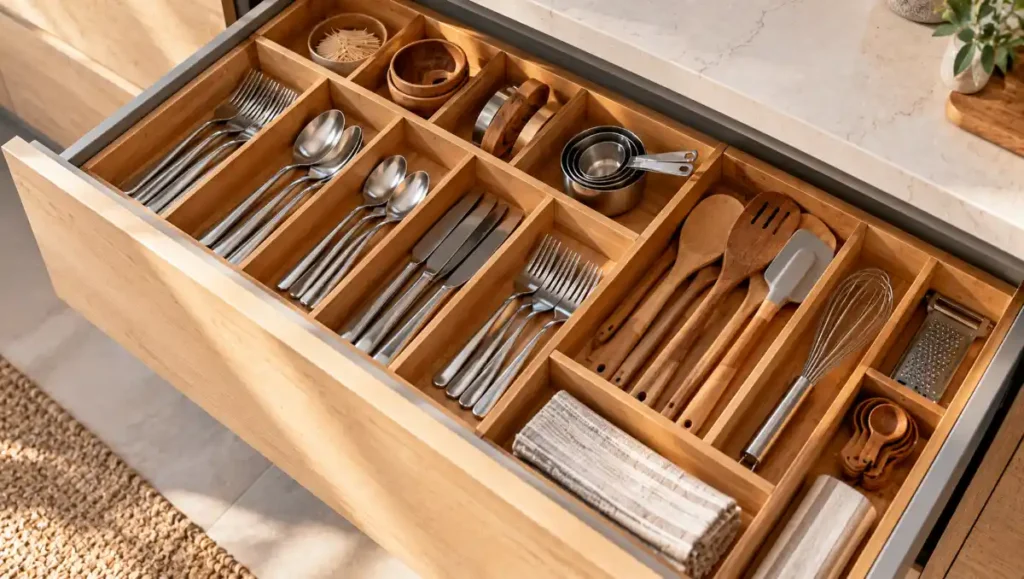
Kitchen drawers quickly become cluttered when utensils, gadgets and accessories share the same space.
Adjustable dividers create separate compartments for different categories.
Use them for cutlery, cooking utensils, measuring tools and small accessories.
For deep drawers, consider dedicated organizers for pots and lids.
Best for: Almost every small kitchen.
Storage tip: Arrange items according to how frequently you use them rather than by appearance alone.
7. Use Pull-Out Corner Cabinet Organizers
Corner cabinets can provide substantial storage, but their awkward shape often makes the back difficult to access.
Rotating shelves, kidney-shaped pull-outs and other corner mechanisms can improve accessibility.
However, not every corner cabinet needs an expensive hardware system.
A simple rotating tray or carefully arranged storage bins may be sufficient.
Best for: L-shaped kitchens with hard-to-reach corner cabinets.
Storage tip: Compare the usable capacity of the organizer with the space it occupies before purchasing.
8. Maximize Under-Sink Cabinet Storage
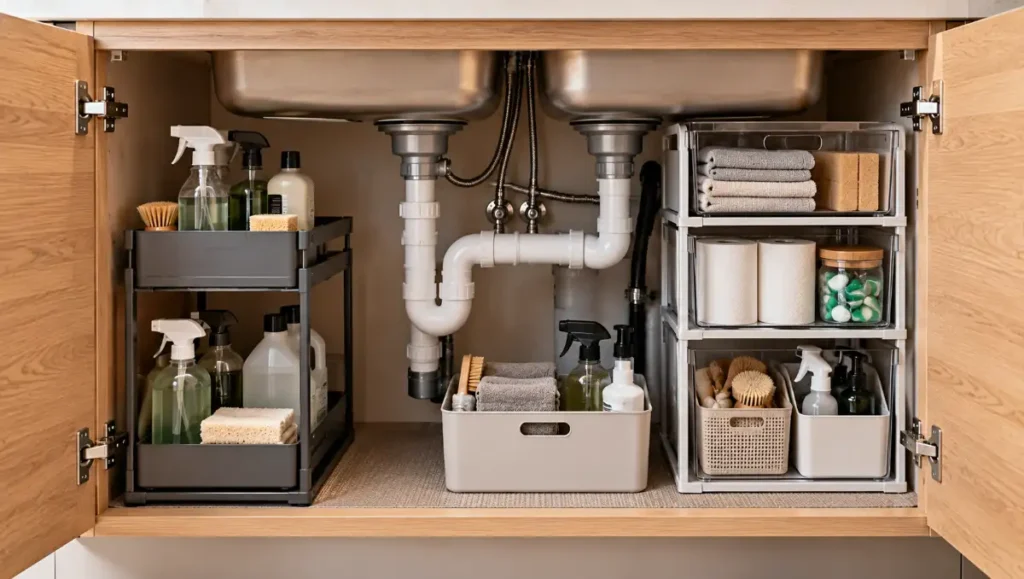
The area beneath the kitchen sink is often difficult to organize because plumbing takes up irregular space.
Stackable bins, shallow pull-out trays and adjustable shelving can help you use the available room.
Choose moisture-resistant organizers and leave access to plumbing connections.
Keep cleaning products securely stored according to their labels, especially in homes with children or pets.
Best for: Small kitchens with limited utility storage.
Storage tip: Do not place items where they could conceal leaks or obstruct plumbing maintenance.
9. Add Toe-Kick Drawers Beneath Base Cabinets
The recessed space below base cabinets is sometimes suitable for shallow drawers.
These drawers can hold flat items such as baking trays, placemats and lightweight kitchen linens.
Toe-kick drawers are usually best planned during a renovation because cabinet construction, flooring and structural clearances must be considered.
They are not suitable for every kitchen.
Best for: Custom cabinetry and compact kitchen renovations.
Storage tip: Ask a cabinet professional to check the design before modifying existing cabinet bases.
10. Choose Tall Pantry Cabinets With Adjustable Shelves
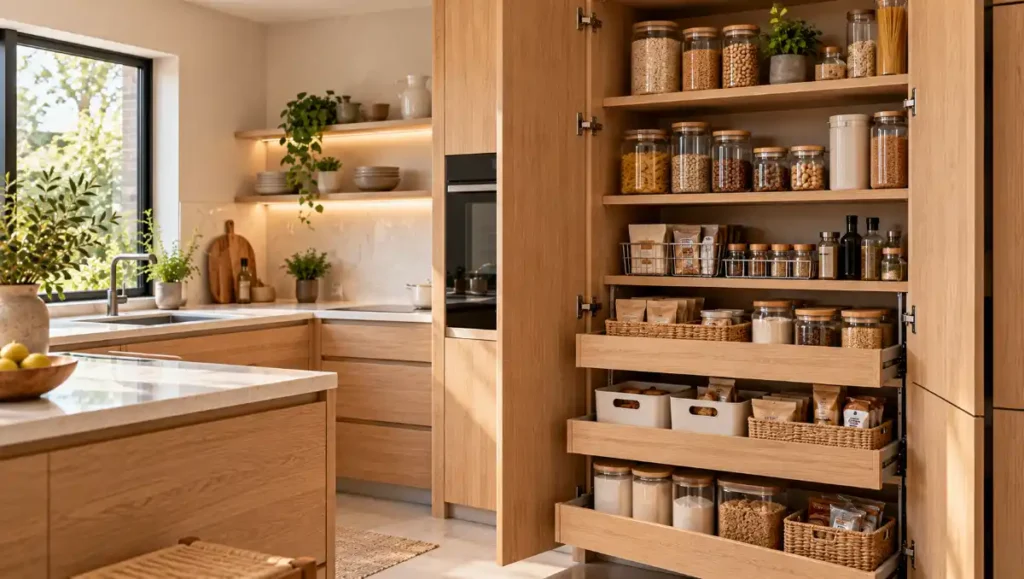
When floor space is limited, vertical storage becomes particularly valuable.
A tall pantry cabinet can store dry goods, dishes and small appliances within a relatively narrow footprint.
Adjustable shelves allow the interior to accommodate containers of different heights.
Pull-out pantry systems can improve access, although they may reduce some usable storage width.
Best for: Small kitchens with unused vertical wall space.
Storage tip: Place heavy items at comfortable lower heights and lightweight items on upper shelves.
11. Use Clear Containers for Pantry Organization
Pantry shelves become difficult to manage when packets and boxes are stacked behind one another.
Transparent, appropriately sized containers make contents easier to identify.
They can also help group frequently used ingredients.
However, transferring every ingredient into a matching container is not always necessary.
Keep original packaging or retain important information such as expiry dates, allergen warnings and cooking instructions.
Best for: Pantry shelves and food-storage cabinets.
Storage tip: Choose food-safe containers with suitable seals for the products you store.
12. Add Hooks Beneath Shelves for Lightweight Items
Small hooks can make use of the underside of suitable cabinet shelves.
They are useful for lightweight mugs, measuring spoons or small kitchen accessories.
This can free up shelf space for dishes and food containers.
Check the shelf material and hook mounting method before installing anything.
Best for: Mug cabinets and compact beverage stations.
Storage tip: Do not overload hooks or attach them to weak shelving.
13. Store Pot Lids Separately
Pot lids are awkward to stack because their handles create uneven surfaces.
A dedicated lid organizer keeps them upright and easier to access.
You can use a cabinet-mounted rack, drawer divider or vertical freestanding holder.
Separating lids from cookware can make both categories easier to organize.
Best for: Base cabinets and deep drawers.
Storage tip: Measure the diameter and handle height of your lids before buying an organizer.
14. Use Narrow Rolling Carts in Unused Gaps
Some kitchens have narrow gaps beside cabinets or appliances that could accommodate additional storage.
A slim rolling cart can hold pantry items, towels or other lightweight essentials.
However, avoid blocking appliance ventilation, electrical access or required clearances.
Not every gap should be filled.
Best for: Compact kitchens with genuinely usable side spaces.
Storage tip: Measure the full depth and width of the gap, including baseboards and handles.
15. Create a Dedicated Appliance Storage Zone
Small appliances can overwhelm countertops.
If you use a blender, toaster or food processor occasionally, consider assigning it a specific cabinet shelf or deep drawer.
Keep daily-use appliances accessible and store less frequently used items elsewhere.
A dedicated appliance cabinet can also work in a larger kitchen renovation.
Best for: Kitchens with limited counter space.
Storage tip: Do not operate heat-producing appliances inside enclosed cabinets unless the system is specifically designed and approved for that use.
16. Add Wall Rails and Open Shelves Strategically
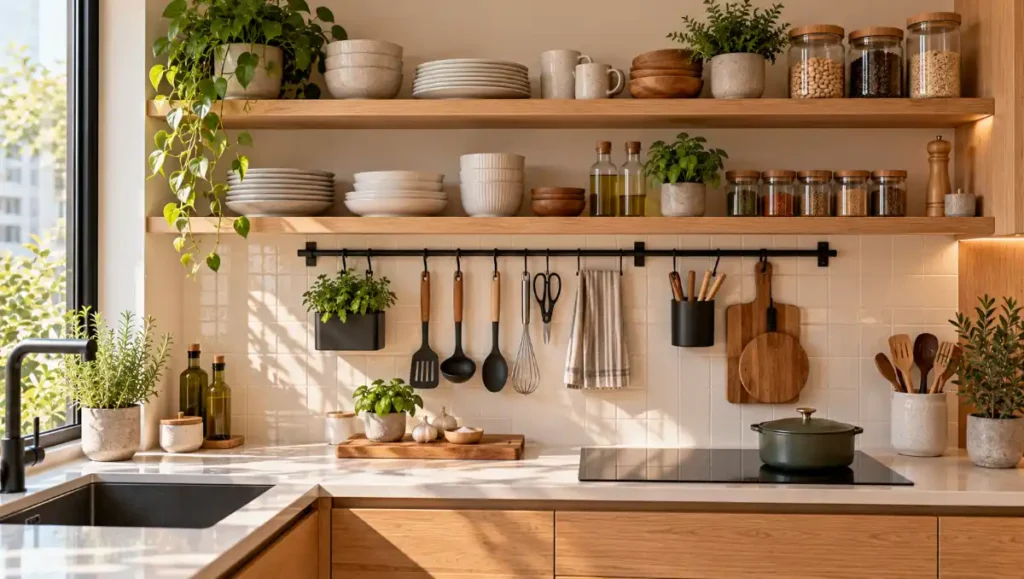
Not all kitchen storage has to be hidden inside cabinets.
A short wall rail can hold frequently used utensils, while a shallow open shelf can provide space for everyday dishes or decorative items.
These solutions can work particularly well when additional full-depth cabinets would make a small kitchen feel crowded.
However, open storage requires more frequent cleaning because dust and cooking grease can accumulate.
Best for: Small kitchens with available wall space.
Storage tip: Keep items clear of cooking hazards and install shelves with suitable fixings for the wall and expected load.
17. Organize Cabinets by Kitchen Activity
One of the most effective small kitchen storage ideas costs almost nothing.
Instead of organizing everything only by size, arrange your cabinets around everyday tasks.
Create practical zones for:
- Cooking: Pots, pans, cooking utensils and frequently used ingredients
- Food preparation: Cutting boards, knives and mixing bowls
- Cleaning: Suitable cleaning supplies, cloths and related accessories
- Food storage: Containers, wraps and pantry staples
- Serving: Plates, glasses, mugs and cutlery
Store frequently used items near the areas where you need them.
This reduces unnecessary movement and makes even a compact kitchen easier to use.
Best for: Every kitchen layout.
Storage tip: Review the arrangement after a few weeks and adjust anything that still feels inconvenient.
Small Kitchen Storage Ideas at a Glance
| Storage idea | Best location | Renovation needed? |
|---|---|---|
| Pull-out shelves | Deep base cabinets | Sometimes |
| Shelf risers | Upper cabinets | No |
| Vertical dividers | Tray cabinets | Usually no |
| Door-mounted racks | Cabinet doors | Sometimes |
| Pull-out spice rack | Narrow cabinets | Sometimes |
| Drawer dividers | Kitchen drawers | No |
| Corner organizers | Corner cabinets | Sometimes |
| Under-sink organizers | Sink cabinet | Usually no |
| Toe-kick drawers | Cabinet bases | Usually yes |
| Tall pantry cabinet | Unused wall space | Usually yes |
| Clear containers | Pantry shelves | No |
| Under-shelf hooks | Suitable shelves | Sometimes |
| Pot-lid organizers | Drawers and base cabinets | No |
| Slim rolling cart | Safe, usable gaps | No |
| Appliance storage | Deep cabinets | Usually no |
| Wall rails and shelves | Available wall space | Sometimes |
| Activity-based zones | All cabinets | No |
How to Make a Small Kitchen Look Less Cluttered
More storage does not automatically make a kitchen feel organized.
A compact kitchen can still look busy when countertops are crowded or open shelves contain too many items.
Try these simple improvements:
Keep countertops selective. Leave out only the appliances and utensils you use regularly.
Use consistent storage categories. Group similar items together instead of spreading them across several cabinets.
Choose appropriately sized organizers. Oversized baskets and bulky racks can waste more space than they save.
Improve lighting. Under-cabinet lighting can make work surfaces easier to use and visually brighten a compact kitchen.
Avoid filling every shelf completely. Leave enough room to retrieve items comfortably.
Small Kitchen Storage Ideas for Renters
If you rent your home, focus on removable solutions that do not require permanent cabinet alterations.
Freestanding shelf risers, adjustable drawer dividers, pantry baskets and vertical tray organizers are useful starting points.
Over-door racks may also work if they do not damage cabinet finishes or interfere with door closure.
Check your tenancy agreement before drilling, installing hardware or modifying cabinetry.
What Should You Organize First?
If your kitchen feels overwhelming, begin with the cabinet that causes the most daily frustration.
For many households, this is the cookware cabinet, food-storage drawer or pantry.
Empty the space, remove unnecessary items, measure it and test a simple layout before purchasing organizers.
Start with low-cost changes. If they do not solve the problem, consider more permanent options such as pull-out shelves or custom cabinetry.
For broader home improvement planning, explore our home renovation ideas that add value.
Common Small Kitchen Storage Mistakes
Buying Organizers Before Measuring
A beautiful organizer is useless if it prevents the cabinet from closing.
Storing Heavy Items Too High
Keep heavy cookware and appliances at accessible lower levels to reduce lifting risks.
Ignoring Cabinet Hardware
Hinges, drawer slides and pull-out mechanisms all need clearance.
Filling Every Available Gap
Some spaces must remain open for ventilation, maintenance or safe appliance operation.
Prioritizing Appearance Over Accessibility
A perfectly coordinated pantry is not useful if everyday items are difficult to reach.
Forgetting to Declutter
Adding organizers without reducing unnecessary items can make an already crowded kitchen more complicated.
Final Thoughts
The smartest small kitchen storage ideas do more than create extra space. They make your kitchen easier to use every day.
Pull-out shelves, drawer dividers, vertical organizers and thoughtful pantry systems can improve the function of existing cabinets. More involved solutions, such as toe-kick drawers and custom pantry units, may be worthwhile during a renovation.
But the simplest improvement is often reorganizing what you already own.
Start with one cabinet, focus on accessibility and choose solutions that suit your kitchen’s actual dimensions.
In a small kitchen, the goal is not to store the most. It is to make the best use of the space you have.
Frequently Asked Questions
How can I maximize storage in a small kitchen?
Use vertical shelf space, install suitable pull-out organizers, divide drawers and arrange cabinets by activity. Decluttering before adding storage can also make a significant difference.
What is the best storage solution for deep kitchen cabinets?
Full-extension pull-out shelves are often useful because they make items at the back easier to access. Large bins can also work when permanent modifications are not possible.
How do you organize a small kitchen without a pantry?
Group dry foods in designated cabinets, use adjustable shelves and containers where helpful, and keep frequently used ingredients within easy reach.
Are pull-out kitchen shelves worth it?
They can be worthwhile in deep cabinets where access is difficult. Compare installation cost, load capacity and usable storage space before purchasing.
How can I add kitchen storage without renovating?
Try shelf risers, drawer dividers, vertical organizers, freestanding racks and carefully positioned rolling carts.
How do you organize pots and pans in a small kitchen?
Use deep drawers or pull-out shelves for cookware and store lids separately in vertical organizers.
What should go in upper kitchen cabinets?
Upper cabinets are generally suitable for lighter items such as glasses, dishes and pantry supplies that can be accessed safely.
How do you make a small kitchen look bigger?
Reduce visible clutter, maintain clear countertops, improve lighting and use consistent finishes. Avoid overcrowding open shelves.
Are open shelves good for small kitchens?
They can make everyday items accessible and reduce the visual bulk of wall cabinets, but they require more cleaning and careful styling.
What is the cheapest way to improve kitchen storage?
Decluttering and reorganizing cabinets by task usually costs nothing. Shelf risers, drawer dividers and simple baskets are relatively affordable next steps.