Green has become a familiar choice in interior design, but Benjamin Moore’s latest selection brings a more confident interpretation of the color into focus.
Benjamin Moore has named Webster Green HC-130 its Color of the Year 2027, highlighting a classic mid-tone green that feels equally appropriate in traditional homes and contemporary interiors.
Announced on October 14, 2026, Webster Green belongs to Benjamin Moore’s Historical Color Collection. Rather than introducing a completely new shade, the company selected an established color that reflects the lasting appeal of green in residential design.
But what does Webster Green actually look like, what colors go with it, and where should you use it at home?
From living room walls and kitchen cabinets to bedroom color schemes and front doors, this guide explores practical ways to decorate with Benjamin Moore’s 2027 Color of the Year.
What Is Benjamin Moore Webster Green HC-130?
Webster Green HC-130 is a medium-depth green paint color with a balanced, grounded appearance.
Unlike pale sage green, which tends to feel soft and muted, Webster Green has greater visual presence. It is also less intense than many jewel-toned emerald greens.
Benjamin Moore describes the color as a versatile green that combines the stability associated with blue and the warmth associated with yellow.
Its appearance can shift depending on lighting, surrounding finishes and the size of the painted surface.
In bright daylight, Webster Green may appear fresher and more expressive. Under subdued lighting, it can feel richer and more enveloping.
That balance makes it suitable for homeowners who want a noticeable color without choosing something excessively bright.
Paint color: Webster Green
Color code: HC-130
Brand: Benjamin Moore
Collection: Historical Color Collection
Recognition: Color of the Year 2027
For accurate color matching, use an official Benjamin Moore sample rather than relying on digital swatches.
Why Did Benjamin Moore Choose Webster Green for 2027?
Benjamin Moore announced Webster Green as its 2027 Color of the Year after considering the continued relevance of green across architecture, interior design and historical color palettes.
According to the company, the selection reflects a desire for colors that feel established yet adaptable to contemporary spaces.
The broader 2027 palette also includes soft neutrals, earthy browns, muted pink and pale blue, suggesting an approach to decorating that balances expressive color with familiar materials.
For homeowners, the appeal is straightforward: Webster Green can work as a statement wall color, a smaller accent or an architectural detail.
Its suitability for multiple design styles also means it need not be limited to a single decorating trend.
1. Use Webster Green on Living Room Walls
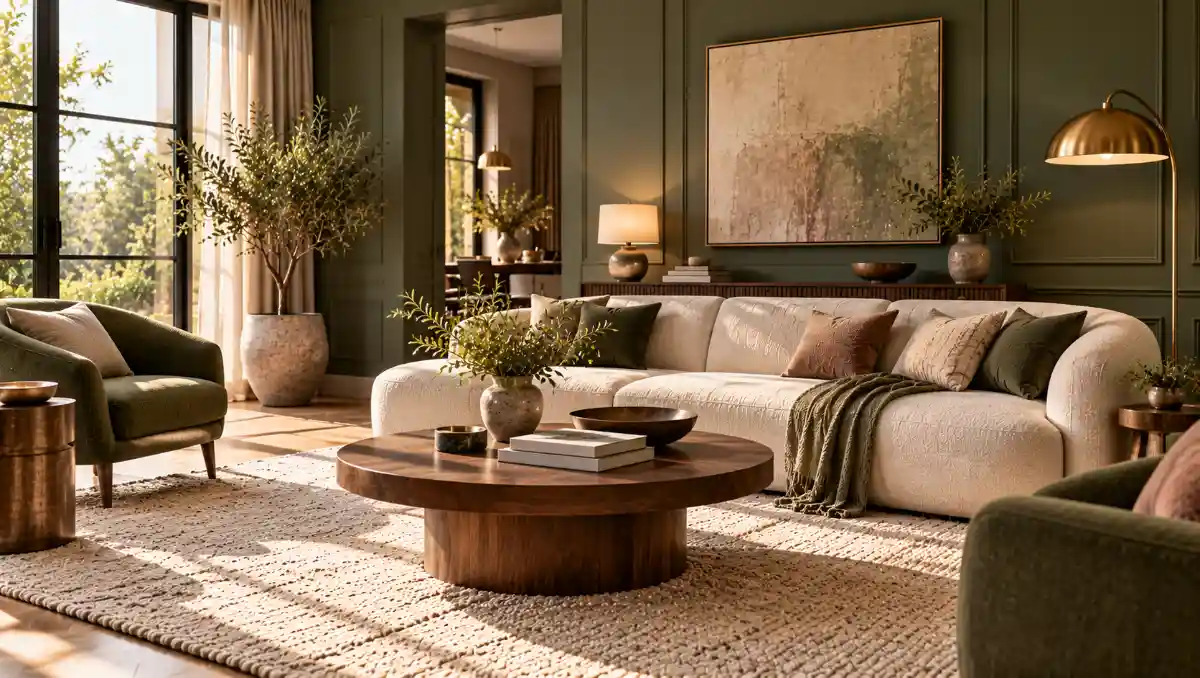
A living room is one of the most effective places to introduce Webster Green.
Its mid-tone depth creates a distinct background for furniture while maintaining a welcoming atmosphere.
For a balanced contemporary living room, try:
- Webster Green walls
- An ivory or oatmeal sofa
- A warm oak coffee table
- A cream textured rug
- Aged brass or dark bronze accessories
The pale upholstery creates contrast, while the timber adds warmth.
If you prefer a more dramatic scheme, combine Webster Green with dark walnut, chocolate brown leather and layered lighting.
In a compact living room, you can limit the green to one wall or a recessed alcove.
For additional layout inspiration, explore our small living room ideas.
Design tip: Test Webster Green on more than one wall before committing, particularly if the room receives limited natural light.
2. Try Webster Green Kitchen Cabinets
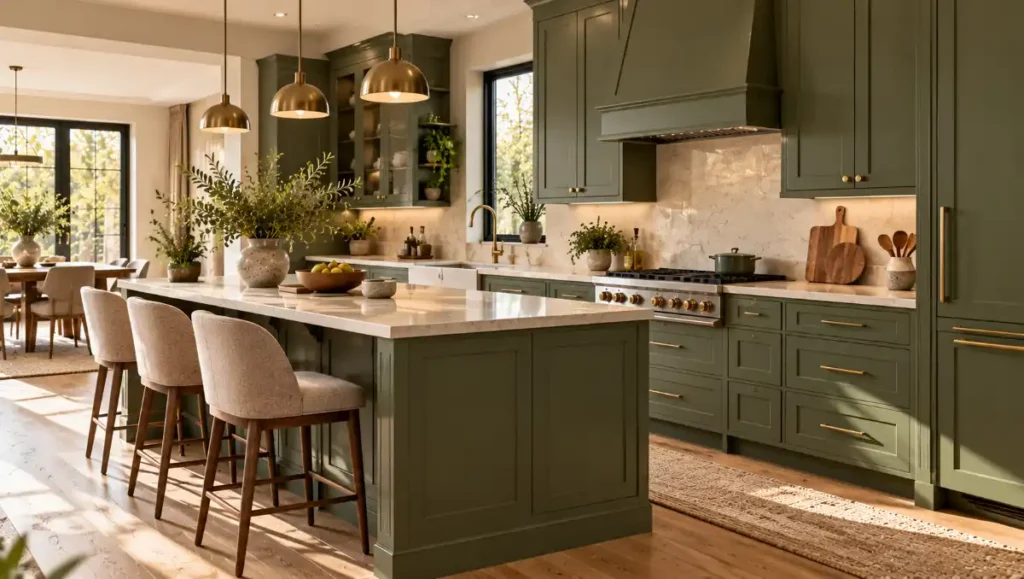
Green cabinetry is a practical way to introduce color without painting every wall.
Webster Green can work particularly well on lower kitchen cabinets, an island or a full run of traditional shaker-style cabinetry.
Modern Kitchen Combination
Pair Webster Green cabinets with:
- Warm white walls
- Light stone countertops
- Pale oak flooring
- Brushed brass handles
- Simple ceramic backsplash tiles
This creates a contemporary kitchen with a natural, grounded appearance.
Traditional Kitchen Combination
For a classic design, combine Webster Green with cream walls, walnut furniture, decorative cabinet profiles and warm metal hardware.
Design tip: Have a sample door or panel painted first. Cabinet finishes, sheen and artificial lighting can affect the final appearance.
3. Create a Sophisticated Webster Green Bedroom
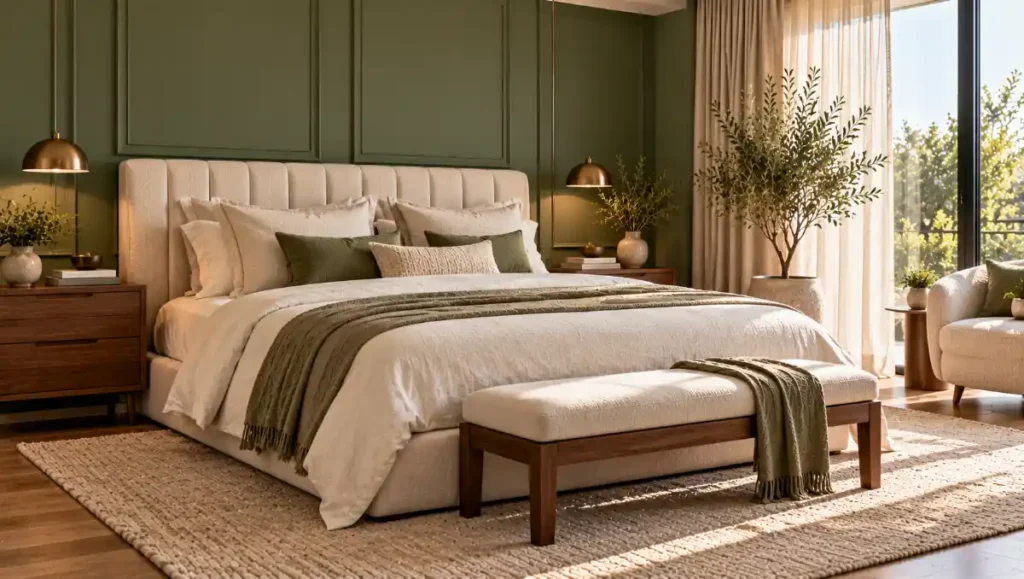
Webster Green can give a bedroom a comfortable, cocooning quality.
A feature wall behind the bed is a good starting point, particularly when paired with ivory bedding and warm timber furniture.
For a more immersive design, consider painting the walls and selected architectural details in the same green.
This technique, often called color drenching, creates a more continuous visual effect.
Keep the bedding light and introduce texture through linen, wool and upholstered furniture.
Best pairings: Ivory, taupe, natural oak, muted blush and chocolate brown.
Design tip: If the bedroom feels dark, introduce warm white on the ceiling and use multiple light sources rather than relying on a single overhead fixture.
4. Paint a Front Door Webster Green
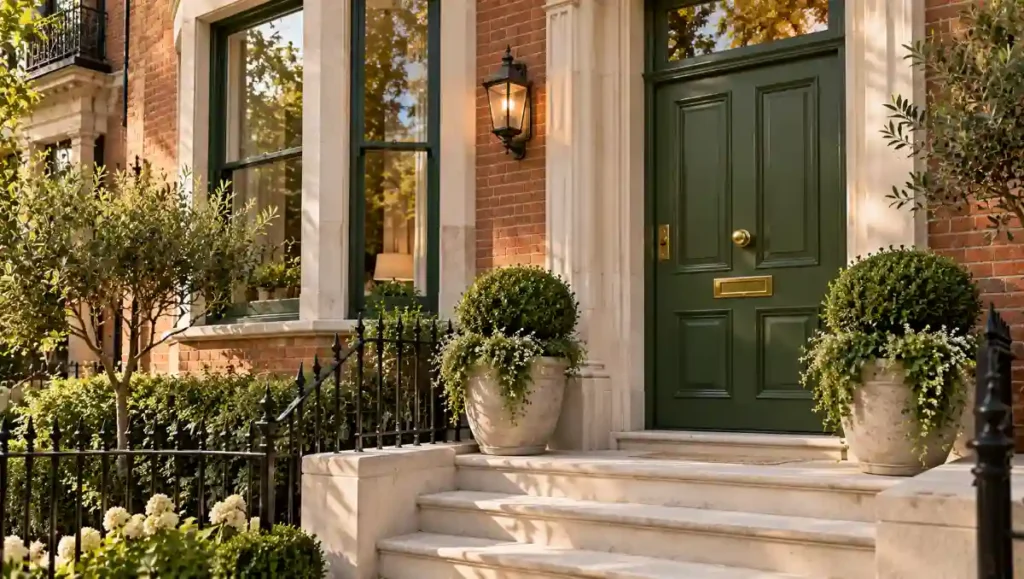
You do not need to repaint an entire room to enjoy Benjamin Moore’s Color of the Year.
A front door can be an excellent place to use Webster Green.
The shade can complement traditional brick, cream render, natural stone and warm neutral exterior finishes.
For a coordinated entrance, consider pairing the door with:
- Warm white exterior trim
- Brass or black door hardware
- Natural stone steps
- Simple green planting
- A restrained exterior light fixture
Benjamin Moore also showcases Webster Green on exterior doors and trim.
Design tip: Choose a paint product suitable for the door material and exterior exposure. A color code alone does not determine whether a particular paint formulation is appropriate.
5. Highlight Built-In Shelves and Architectural Details
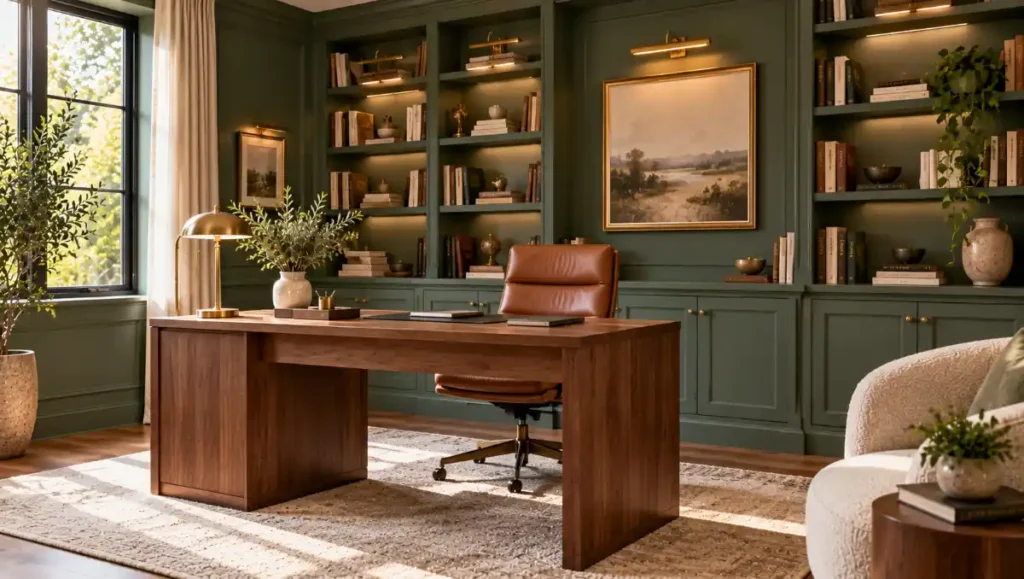
Webster Green works well on built-in cabinetry, shelving, paneling and trim.
Painting an entire bookcase green can make it feel integrated into the architecture rather than like a separate piece of furniture.
For a traditional study, try green shelving with a walnut desk, leather chair and brass reading lamp.
In a contemporary home, use Webster Green on a media cabinet against warm white walls.
You can also paint interior doors or window trim for a more restrained introduction of color.
This approach is particularly useful if you like the shade but are hesitant to commit to large painted surfaces.
6. Use Webster Green in a Dining Room
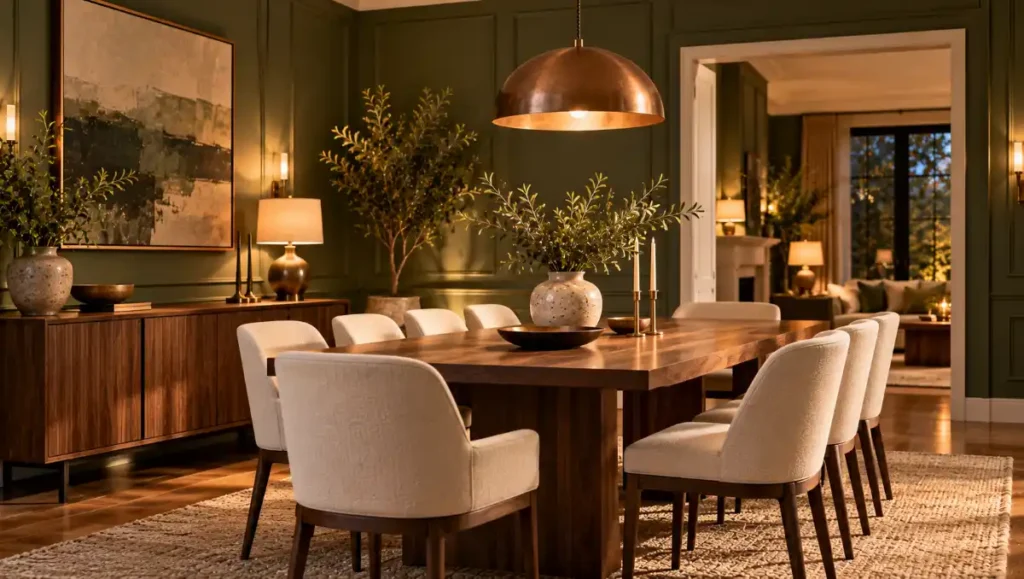
A dining room can accommodate a richer color palette, especially when it is used mainly in the evening.
Webster Green walls provide a strong backdrop for oak or walnut dining furniture.
Warm pendant lighting, linen curtains and ceramic tableware can soften the overall appearance.
For a more expressive scheme, introduce muted copper, burgundy or ochre through artwork and accessories.
If the dining room connects directly to a neutral kitchen, repeat a small amount of green elsewhere to create visual continuity.
7. Introduce Webster Green Through Furniture and Decor
Painting is not the only option.
You can bring a similar green into your home through upholstered chairs, cushions, curtains, rugs and decorative accessories.
A green velvet chair can provide a focal point in an otherwise neutral living room.
Green curtains can complement ivory walls and timber furniture.
In a bedroom, a deep green upholstered headboard can introduce color without requiring a major renovation.
Remember that fabrics and other brands’ finishes will not necessarily match Webster Green HC-130 exactly.
Use a physical paint sample if you want to coordinate them closely.
What Colors Go With Webster Green?
Webster Green pairs particularly well with warm neutrals, natural materials and selected contrasting colors.
| Color | Effect | Where to use it |
|---|---|---|
| Warm white | Fresh and balanced | Walls, ceilings, trim |
| Ivory | Soft and elegant | Sofas, curtains, bedding |
| Beige | Warm and relaxed | Rugs and upholstery |
| Taupe | Refined and understated | Furniture and textiles |
| Natural oak | Organic and welcoming | Flooring and furniture |
| Walnut brown | Rich and classic | Cabinets and tables |
| Muted blush | Gentle contrast | Cushions and artwork |
| Dusty blue | Soft, layered color | Bedrooms and accessories |
| Antique copper | Warm and expressive | Hardware and decor |
| Burgundy | Dramatic and traditional | Accent chairs and textiles |
Webster Green and Warm White
Warm white is one of the easiest combinations to use.
It creates contrast without making the room feel stark.
Try Webster Green cabinets with warm white walls or a green feature wall with white trim.
Webster Green and Natural Wood
Oak and walnut complement the organic quality of green.
Light oak creates a fresher, more contemporary look, while dark walnut feels richer and more traditional.
Webster Green and Mauve
Muted mauve can create an interesting contrast with Webster Green.
The pink-purple undertones of mauve balance green, especially when both colors are supported by ivory or beige.
For more inspiration, read our guide to 15 beautiful color combinations that go with mauve.
Webster Green and Sage Green
Layering Webster Green with softer sage green can create a tonal scheme with more depth.
Use Webster Green on cabinetry or a feature wall, then introduce sage through textiles and accessories.
For additional green-based palettes, explore 15 beautiful colors that go with sage green.
Benjamin Moore’s Complete Color Trends 2027 Palette
Webster Green is the central color in an eight-shade collection announced by Benjamin Moore.
The official palette includes:
| Paint color | Code | General character |
|---|---|---|
| Webster Green | HC-130 | Confident mid-tone green |
| White Down | OC-131 | Soft off-white |
| Nelson Blue | CW-635 | Pale, watery blue |
| Shakespeare Tan | 228 | Golden neutral |
| Antique Copper | 1169 | Warm copper-brown |
| Wild Aster | 1240 | Muted pink |
| Durango | 2137-30 | Deep olive-toned neutral |
| Townsend Harbor Brown | HC-64 | Deep burgundy-brown |
These colors can be used individually or combined in carefully balanced schemes.
For example, Webster Green with White Down creates a relatively simple two-color palette.
Adding Shakespeare Tan can introduce warmth, while Wild Aster creates a softer contrast.
Nelson Blue offers a lighter, cooler accent, and Townsend Harbor Brown provides a deeper, more dramatic option.
The complete collection can be viewed on Benjamin Moore’s official Color Trends 2027 page.
Webster Green vs Sage Green: What’s the Difference?
Webster Green and sage green can both work in nature-inspired interiors, but they create different visual effects.
Webster Green is generally deeper, more saturated and more visually prominent.
Sage green usually refers to a softer, greyed green with a quieter appearance.
Choose Webster Green if you want a distinctive cabinet color, a feature wall or an expressive front door.
Choose sage green if you prefer a subdued background that feels light and relaxed.
You can also use both together, provided there is enough tonal difference between them.
Is Webster Green Good for Small Rooms?
Yes, Webster Green can work in small rooms, but the effect depends on lighting and how much of the color you use.
A single green wall can create a focal point without dominating the room.
Painting a small study entirely in Webster Green can produce a more enveloping appearance.
If you prefer a brighter interior, use the shade on shelving, cabinetry or a door while keeping larger surfaces neutral.
Dark or mid-tone paint does not automatically make a room feel smaller. Contrast, natural light, furniture proportions and visual clutter also influence how spacious it feels.
What Paint Finish Should You Choose?
The most appropriate finish depends on the surface, room and product.
Matte or eggshell: Often suitable for interior walls, depending on durability and cleaning requirements.
Satin: Can provide a subtle sheen on selected architectural surfaces and cabinetry when the product is designed for that use.
Semi-gloss: Often used for doors, trim and some cabinet applications where a more noticeable sheen is desired.
For kitchen cabinets, doors and exterior surfaces, select a compatible coating system rather than using ordinary wall paint indiscriminately.
Follow the manufacturer’s instructions for surface preparation, primer, application and curing.
How to Test Webster Green Before Painting
Before buying enough paint for an entire room, follow these steps:
- Obtain an official Webster Green HC-130 sample.
- Apply it to a movable sample board or use a suitable peel-and-stick sample.
- View it beside your flooring, furniture and existing trim.
- Check its appearance in morning, afternoon and evening light.
- Compare different wall positions, especially near windows and darker corners.
- Confirm the final paint finish and product before purchasing.
Digital photographs and screen swatches cannot reliably reproduce an exact paint color.
Testing is especially important when pairing Webster Green with other greens, warm whites or pink-toned accents.
Common Mistakes to Avoid With Webster Green
Choosing White Without Checking Undertones
A cool white can create a different contrast from a creamy off-white. Compare samples rather than assuming every white will work equally well.
Ignoring the Room’s Lighting
A mid-tone green may appear significantly deeper in a room with limited daylight.
Using Too Many Competing Accent Colors
Webster Green already has a noticeable presence. Start with one neutral and one supporting accent.
Overlooking Existing Flooring
Orange-toned timber, cool grey tile and warm stone can all influence how green paint appears.
Painting Cabinetry Without Proper Preparation
Cabinets require suitable cleaning, preparation, primers and durable finishes. Skipping these steps can lead to poor results regardless of the chosen color.
Final Thoughts: Is Webster Green Worth Trying?
Benjamin Moore’s Webster Green HC-130 offers a versatile alternative to pale sage greens and more dramatic emerald shades.
Its combination of depth and familiarity makes it useful across traditional, transitional and contemporary homes.
For an easy introduction, try Webster Green on a front door, built-in shelving or a kitchen island.
For a stronger design statement, use it on living room walls, bedroom paneling or kitchen cabinetry.
Pair it with warm white, natural oak, ivory or walnut for a timeless scheme, or introduce muted mauve, copper and burgundy for a more expressive look.
Although Webster Green has been named the 2027 Color of the Year, its established place in Benjamin Moore’s historical collection gives it relevance beyond a single trend cycle.
Frequently Asked Questions
What is Benjamin Moore’s Color of the Year 2027?
Benjamin Moore’s Color of the Year 2027 is Webster Green HC-130, a versatile mid-tone green from its Historical Color Collection.
Is Webster Green a dark green?
Webster Green is generally described as a mid-tone green. It has more depth than pale sage but is not as dark as many forest greens.
What colors pair best with Webster Green?
Warm white, ivory, beige, taupe, natural oak, walnut, muted blush, dusty blue and copper tones can complement Webster Green.
Can Webster Green be used on kitchen cabinets?
Yes. It can work on kitchen cabinets and islands when applied using a suitable cabinet coating and preparation system.
Is Webster Green suitable for a front door?
Yes. Benjamin Moore features Webster Green on exterior doors and trim. Use an exterior-rated product appropriate for the surface.
Does Webster Green go with sage green?
Yes. The two greens can create a layered tonal palette, especially when supported by warm white or natural wood.
Is Webster Green suitable for modern homes?
Yes. Webster Green can complement contemporary furniture, simple architectural details, warm neutrals and natural materials.
Should I use Webster Green on all four walls?
You can, but test the color first. A fully painted room will feel different from one with a single green accent wall.