Aluminium windows are popular in modern homes for good reasons. The material is strong, durable and capable of creating relatively slim frames around large areas of glass.
But aluminium also has an important weakness: it conducts heat readily.
That means a basic aluminium frame can create an easy pathway for heat to move between the interior and exterior of a building.
A thermal break is designed to interrupt that pathway.
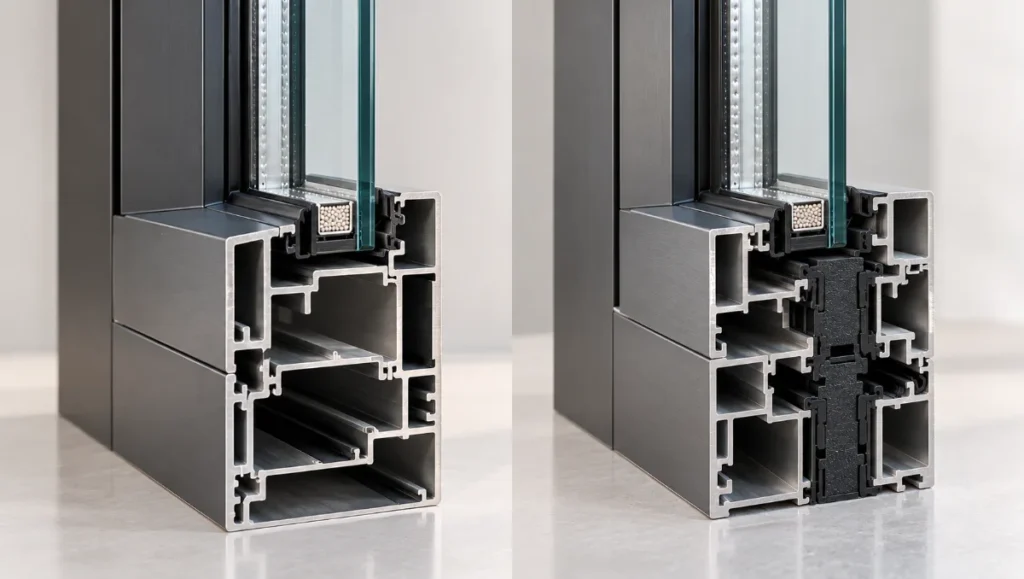
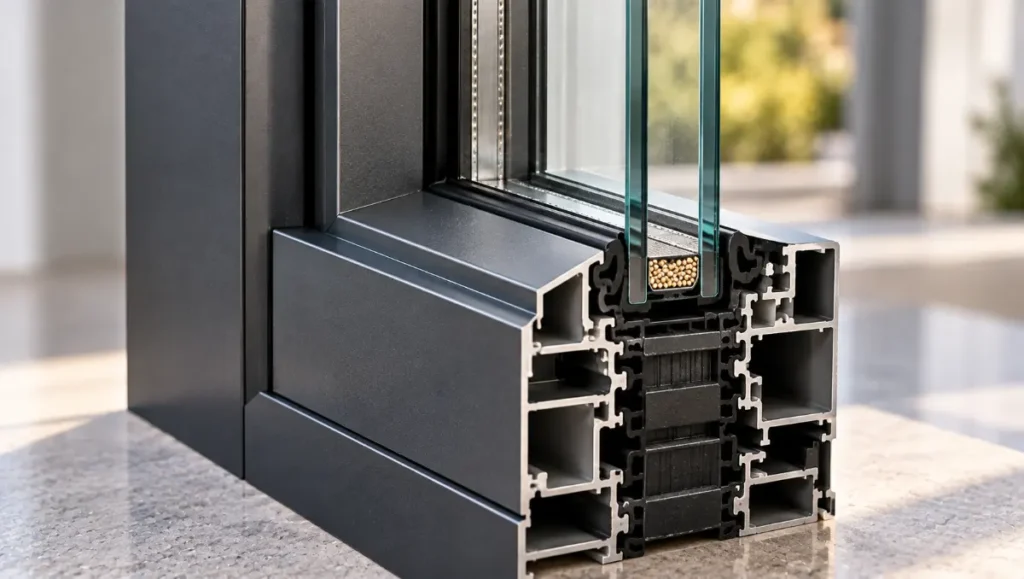
Thermal break aluminium windows use an insulating material between the interior and exterior aluminium sections of the frame, reducing direct conductive heat transfer through the metal.
The result can be a better-performing aluminium window with improved thermal comfort and reduced risk of cold interior frame surfaces under appropriate conditions.
But thermally broken windows generally cost more than basic aluminium systems.
So how do they actually work, and are they worth paying for?
Let’s look at the technology in detail.
What Is a Thermal Break in an Aluminium Window?
A thermal break is a relatively low-conductivity material positioned between the exterior and interior aluminium portions of a window frame.
A thermal barrier interrupts the continuous aluminium pathway between the exterior and interior portions of the window frame.
Instead of creating one continuous piece of aluminium connecting outdoors directly to indoors, the frame is effectively separated into two sections.
The thermal barrier connects those sections while reducing the direct path for heat conduction.
The U.S. Department of Energy describes a thermal break in a metal window as an insulating plastic strip placed between the inside and outside portions of the frame and sash.
That apparently simple change can substantially affect how the frame performs.
Why Do Aluminium Windows Need Thermal Breaks?
The reason comes down to one of aluminium’s fundamental material properties.
Aluminium conducts heat efficiently.
That characteristic is useful in applications such as heat sinks and cookware, but it is less desirable when the material forms part of a building envelope.
Imagine a conventional aluminium frame on a cold winter day.
The exterior aluminium becomes cold.
Because the metal conducts heat readily, that low temperature can travel through a continuous frame toward the interior surface.
The reverse can happen during hot conditions: exterior heat can conduct through the frame toward the interior.
A thermal break interrupts this direct metal pathway.
It does not stop heat transfer completely, but it can reduce it significantly.
Without the thermal barrier, the interior and exterior aluminium are directly connected.
With a thermal break, the conductive path is interrupted by a material that transfers heat much less readily than aluminium.
The principle is similar to insulation elsewhere in a building envelope.
A thermally broken frame therefore allows homeowners to retain many of aluminium’s architectural advantages while addressing one of its major thermal weaknesses.
What Is the Thermal Break Made From?
The exact material and manufacturing method vary by window system.
Modern thermally broken aluminium profiles commonly use engineered polymer-based insulating components designed to separate the aluminium sections while maintaining the required structural relationship between them.
The dimensions and configuration of that barrier can vary substantially.
This is important because the phrase “thermal break” does not automatically mean that every thermally broken aluminium window performs equally well.
Barrier geometry, frame design, glazing, seals and overall construction all influence final performance.
Thermal Break vs Standard Aluminium Windows
The fundamental difference is the continuity of the metal frame.
Unlike a continuous aluminium frame, a thermally broken profile separates the interior and exterior metal sections with a lower-conductivity barrier.
Feature
Standard Aluminium
Thermal Break Aluminium
Continuous metal path
Usually yes
Interrupted
Conductive heat transfer
Higher
Reduced
Frame thermal performance
Lower
Improved
Interior surface temperatures
More influenced by exterior conditions
Better isolated
Condensation resistance
Generally lower
Can be improved
Frame strength
High
High when properly engineered
Slim modern appearance
Yes
Yes
Cost
Usually lower
Usually higher
Suitable for high-performance glazing
Possible
Better thermal match in many systems
A thermal break does not transform aluminium into a perfect insulator.
It simply makes the frame considerably more thermally sophisticated than a continuous-metal design.
1. Improved Thermal Performance
The most obvious benefit is lower heat transfer through the frame.
Window thermal performance is commonly represented using U-factor or U-value.
In general:
Lower U-factor = less heat transfer.
Because a continuous aluminium frame transfers heat relatively easily, it can raise the overall U-factor of the window.
Introducing an effective thermal break can reduce frame heat transfer.
However, always compare the whole-window performance, not just the frame.
Glass, spacers, frame-to-glass ratio and window dimensions also affect the final result.
2. Better Indoor Comfort
Energy performance is not only about utility bills.
Surface temperature also affects how comfortable a room feels.
A poorly insulated frame can become noticeably cold during winter conditions or hot when exposed to intense exterior heat.
Improving the thermal separation between exterior and interior aluminium helps reduce that temperature transfer.
This can make areas close to windows more comfortable, particularly in climates with substantial indoor-outdoor temperature differences.
3. Reduced Condensation Risk
Condensation occurs when a surface becomes sufficiently cold for moisture in indoor air to condense on it.
A highly conductive aluminium frame can become cold on its interior surface during cold weather.
Improving the thermal performance of the frame can raise interior surface temperatures and therefore help improve condensation resistance.
But this needs an important qualification:
Thermal breaks do not guarantee condensation-free windows.
Indoor humidity, outdoor temperature, glazing performance, frame geometry, ventilation and installation all influence condensation.
A thermally improved frame reduces one important risk factor rather than eliminating the physical possibility of condensation.
4. Aluminium’s Slim Architectural Appearance
Thermal breaks allow architects and homeowners to improve aluminium frame performance without abandoning the material.
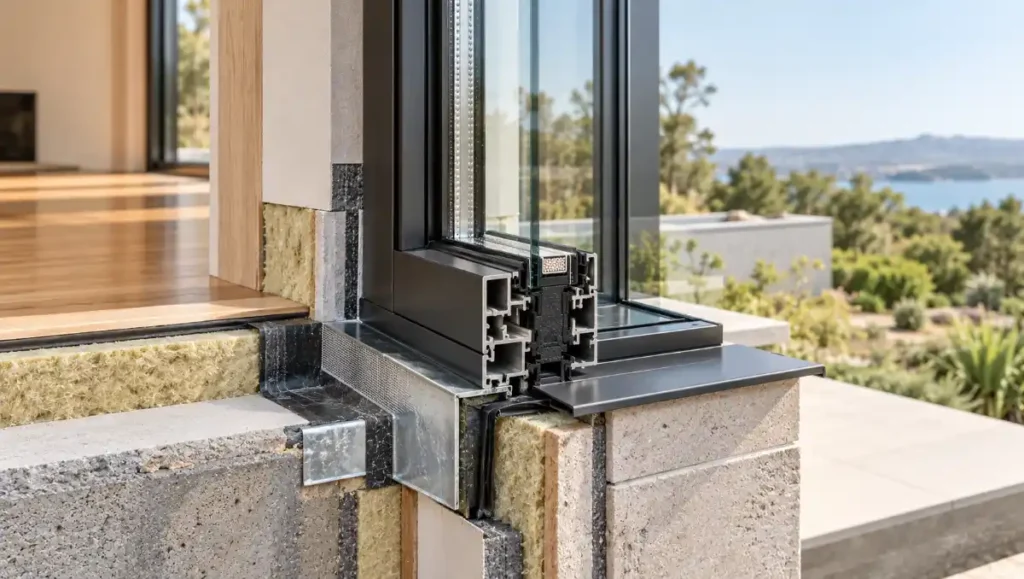
Correct installation and integration with the building envelope are essential to realizing the performance of a high-quality window system.
That matters because aluminium remains attractive for contemporary architecture.
It can be used to create:
Clean frame lines
Large glazed openings
Contemporary dark finishes
Fixed picture windows
Casement windows
Sliding systems
Large glazed doors
Architectural facade systems
If your main priority is visual design, our guide to modern aluminium window design explores different window configurations and architectural applications in more detail.
The thermal break adds a performance layer to that aesthetic decision.
5. Better Match for High-Performance Glazing
Installing high-performance double or triple glazing inside a poorly performing metal frame can create an imbalance.
The glass may resist heat transfer relatively well while the continuous aluminium frame remains a conductive pathway.
Thermally improving the frame allows it to work more effectively alongside modern insulated glazing.
A high-performance window should therefore be considered as a system consisting of:
Focusing on the number of glass panes alone can be misleading.
6. Useful for Large Modern Windows
Contemporary houses frequently use large areas of glazing.
Modern living room with large thermally broken aluminium windows overlooking a landscaped garden.
Larger openings make window design particularly important because windows occupy a greater portion of the building envelope.
Aluminium’s strength makes it attractive for many large-window applications, although structural requirements vary considerably with window dimensions, wind loads, configuration and system design.
Thermally broken frames can combine that architectural flexibility with improved thermal performance.
7. Heating and Cooling Performance
Windows do not consume heating or cooling energy themselves, but they influence how much heat enters or leaves a conditioned building.
Reducing unnecessary heat transfer through frames can therefore contribute to lowering the heating or cooling load associated with the building envelope.
The actual energy savings from choosing thermally broken aluminium windows depend on factors including:
Climate
Window area
Existing frame performance
Glazing
Building insulation
Orientation
Solar exposure
Shading
Heating and cooling systems
Installation
This is why it is difficult to give a universal percentage saving simply for adding a thermal break.
Thermal Break Aluminium Windows in Cold Climates
Cold climates provide one of the clearest cases for thermally improved metal frames.
Improved frame insulation becomes especially valuable where there is a large temperature difference between indoors and outdoors.
When outdoor temperatures are low and indoor temperatures are much warmer, a continuous aluminium frame can create substantial conductive heat transfer.
The interior frame surface can also become very cold.
A well-designed thermal break helps reduce this pathway.
For homes in colder regions of the USA, Canada, northern Europe and similar climates, whole-window U-factor should be a major part of product comparison.
Triple glazing, low-e coatings and suitable spacers may also be appropriate depending on climate and performance requirements.
What About Hot Climates?
Thermal breaks can also be relevant in hot climates because heat can conduct from hot exterior aluminium toward the interior.
In hot climates, thermally improved frames should be combined with appropriate glazing and external shading to control unwanted heat.
However, conductive frame heat transfer is only one part of summer window performance.
Solar heat entering through the glass can be extremely important.
A high-performance aluminium frame combined with inappropriate unshaded glazing can still result in an overheating problem.
Hot-climate window design should therefore consider:
Solar Heat Gain Coefficient
Low-e or solar-control glazing
External shading
Building orientation
Window area
Thermal frame performance
Air leakage
Our guide to climate-responsive house design explains how shading, ventilation, glazing and the wider building envelope can work together to reduce unwanted heat.
Thermal Break vs Double Glazing
These terms are sometimes confused, but they describe different parts of the window.
Thermal breaks improve the frame while double glazing addresses heat transfer through the glazed portion of the window.
Thermal break = frame technology
Double glazing = glass technology
A double-glazed aluminium window can still have a continuous, non-thermally broken aluminium frame.
Likewise, a thermally broken aluminium frame can be designed around different glazing specifications.
For strong overall performance, the frame and glass should complement one another.
Thermal Break vs Low-E Glass
Low-e glass is also different.
A low-emissivity coating is applied to glazing to help control heat transfer and, depending on the coating, solar heat gain.
The thermal break improves the frame.
Low-e technology improves the glazing system.
Using both can form part of a higher-performance window specification.
Thermal Break Aluminium vs uPVC Windows
uPVC has much lower thermal conductivity than aluminium and does not rely on exactly the same type of metal thermal-break strategy.
That can make uPVC attractive where thermal insulation and value are primary considerations.
Aluminium, however, offers characteristics that make it particularly attractive in contemporary architecture, including rigidity, durability and the potential for refined frame proportions.
Neither material is universally better.
Compare specific window systems using verified whole-window performance values rather than assuming that every aluminium or every uPVC window performs the same way.
If you are still deciding between the two frame materials, our detailed aluminium vs uPVC windows comparison explains the differences in durability, thermal performance, maintenance, design flexibility and cost to help you choose the right option for your home.
Thermal Break Aluminium vs Timber Windows
Timber naturally has lower thermal conductivity than aluminium.
It can therefore provide strong frame thermal performance while offering a warm natural appearance.
However, timber windows have different maintenance, weathering, cost and design considerations.
Thermally broken aluminium may appeal to homeowners seeking a contemporary appearance and relatively low-maintenance exterior finish.
Again, compare actual products rather than material labels.
Does a Thermal Break Make Aluminium Windows Energy Efficient?
It can significantly improve frame performance, but the thermal break alone does not determine whether a window is energy efficient.
A window with an excellent thermal break but poor glass could still perform poorly overall.
Likewise, an excellent insulated glass unit inside a highly conductive frame is not an ideal combination.
Look at measurable whole-window properties.
Depending on your country, useful ratings may include:
U-factor or U-value
Solar Heat Gain Coefficient
Air leakage
Visible transmittance
Condensation resistance
Relevant local certification
Our complete guide to energy-efficient windows explains these measurements and glazing technologies in greater detail.
What Are the Drawbacks?
Thermally broken aluminium windows offer meaningful benefits, but there are several considerations.
Higher Initial Cost
The profile is more complex to manufacture than a basic continuous aluminium extrusion.
High-performance glass and premium hardware can increase the price further.
Product Quality Varies
Simply seeing the phrase “thermal break” in a brochure is not enough.
The dimensions, material, geometry and engineering of thermal barriers differ between systems.
Fabrication Matters
A high-performance profile still needs to be manufactured into a high-quality finished window.
Installation Matters
Poor perimeter sealing, inadequate flashing or incorrect installation can compromise the performance of an otherwise excellent window.
They Don’t Solve Solar Gain Alone
In sunny climates, glazing and external shading can be just as important—or sometimes more important—than frame conductivity.
How Much Do Thermal Break Aluminium Windows Cost?
There is no meaningful global fixed price.
Costs vary significantly between the USA, UK, Canada, Australia, Europe and other markets.
Price also changes according to:
Window dimensions
Opening style
Frame system
Thermal-break design
Double or triple glazing
Glass specification
Finish
Hardware
Security requirements
Installation complexity
Local labor costs
For this reason, compare quotations using the same specification.
A cheaper quote using basic double glazing should not be directly compared with a premium thermally broken system using high-performance low-e insulated glass.
Are Thermal Break Aluminium Windows Worth It?
For many projects, yes—particularly when aluminium is the preferred frame material and energy performance or indoor comfort matters.
They are especially worth considering when:
You live in a climate with large indoor-outdoor temperature differences
The house has substantial window area
You are using high-performance double or triple glazing
You want aluminium’s contemporary appearance
Condensation resistance is important
The project has meaningful energy-performance targets
You plan to remain in the home long enough to value long-term comfort and performance
They may be less compelling when the building is in an extremely mild climate, windows occupy very little envelope area, or the project has minimal heating and cooling requirements.
Even then, compare actual system performance before deciding.
What to Look for Before Buying
Don’t simply ask:
“Does this aluminium window have a thermal break?”
Ask better questions.
Check Whole-Window U-Factor
This gives you more useful information than a vague claim that the frame is “insulated.”
Check the Glass Specification
Ask about:
Number of panes
Low-e coatings
Gas fill where applicable
Spacer technology
SHGC
Safety glass requirements
Ask About the Thermal Barrier
Find out which thermally broken profile system is being offered.
Check Tested Performance
Look for recognized performance testing or certification appropriate to your country.
Compare Like for Like
Make sure competing quotations use similar glass, hardware, dimensions and installation scope.
Investigate Installation
Even premium windows require appropriate:
Perimeter sealing
Flashing
Drainage
Air sealing
Waterproofing
Consider Orientation
A large west-facing window may need a different solar-control strategy from a shaded window on another elevation.
Common Buying Mistakes
Choosing Aluminium Only Because the Frame Looks Slim
Appearance matters, but thermal performance should also be evaluated.
Assuming Every Thermal Break Is Equal
Different systems can produce substantially different results.
Buying Expensive Glass With a Basic Metal Frame
Glass and frame performance should be balanced.
Ignoring SHGC
U-factor and SHGC measure different aspects of window performance.
Forgetting External Shading
Thermal breaks address conduction through the frame. They do not prevent direct solar radiation from passing through inappropriate glazing.
Ignoring Installation
The window-to-wall connection is part of the building envelope.
Should You Replace Existing Aluminium Windows?
If your current aluminium windows are old, single glazed, poorly sealed or have continuous metal frames, replacement can potentially improve comfort and building performance.
But replacement purely for energy savings should be evaluated carefully.
Consider:
Condition of existing windows
Current U-factor
Air leakage
Condensation problems
Comfort near windows
Heating and cooling costs
Replacement cost
Expected service life
If existing windows are relatively new and already perform well, the financial payback from replacement alone may be much longer.
The Bottom Line
Thermal break aluminium windows solve one of the fundamental weaknesses of conventional aluminium frames.
Aluminium is an excellent structural and architectural material, but it conducts heat readily.
Separating the interior and exterior aluminium sections with a less conductive thermal barrier reduces that direct heat-transfer pathway.
The benefits can include better frame thermal performance, improved comfort and greater condensation resistance while preserving the clean appearance and structural advantages that make aluminium popular in contemporary architecture.
But a thermal break is not a magic label.
The best window combines an effective frame design with appropriate glazing, spacers, seals, hardware, shading and professional installation.
If you want aluminium windows for a modern home and live in a climate where heating, cooling or condensation matters, thermally broken aluminium should usually be on your shortlist.
Compare verified whole-window performance rather than buying on appearance—or the words “thermal break”—alone.
Frequently Asked Questions
What is a thermal break in an aluminium window?
A thermal break is a relatively low-conductivity material separating the interior and exterior aluminium portions of a window frame. It reduces the direct conductive pathway through the metal.
Are thermal break aluminium windows better?
They generally provide better frame thermal performance than comparable continuous aluminium frames. Whether they are the best choice depends on climate, glazing, budget and project requirements.
Are thermal break windows worth the extra cost?
They can be, particularly in climates with significant heating or cooling loads, houses with substantial glazing, and projects where indoor comfort and energy performance are important.
Does a thermal break prevent condensation?
It can improve interior frame surface temperatures and condensation resistance, but it cannot guarantee that condensation will never occur. Indoor humidity, outdoor temperature, glazing and installation also matter.
Is thermal break the same as double glazing?
No. A thermal break improves the frame, while double glazing uses two panes of glass separated by a sealed cavity. High-performance aluminium windows often use both technologies.
Can thermal break aluminium windows use triple glazing?
Many high-performance aluminium systems can accommodate insulated glazing, including triple glazing, but the actual glazing capacity depends on the specific profile system.
Are thermal break aluminium windows good for hot climates?
They can reduce conductive heat transfer through the aluminium frame. However, solar heat gain through the glass, external shading, orientation and SHGC are also critical in hot climates.
How can I tell if an aluminium window has a thermal break?
Ask for the manufacturer’s profile specification or technical section drawing. A thermally broken profile will show separate interior and exterior aluminium sections connected by a lower-conductivity barrier.
What should I compare when buying thermal break windows?
Compare whole-window U-factor, SHGC where relevant, glazing specification, air leakage, frame design, installation details, warranty and certification appropriate to your market.